

We’ve spent a lot of time talking about elevator modernization lately. This time, let’s talk about maintenance. Whether you’re planning a modernization or looking for a new elevator service provider in the Greater Seattle, Tacoma, Puget Sound area or over the mountains in Spokane, Washington, maintenance deserves careful thought. You’re entering a long-term relationship, and the quality of that service affects your elevator’s safety, reliability, and lifespan.
At Washington Elevator, we’re a service-first company. Review our Customer Service Process here.
What does Washington Elevator commit to?
Every maintenance customer gets these six commitments:
Monthly preventive maintenance visits. A mechanic is on site every month, not just when something breaks.
A “Kick-Off” call for every new customer. Before work begins, we walk through expectations, contacts, and how service will run, so we start on the right foot.
A callback from a local mechanic within 15 minutes of receiving your service call.
Timely completion of inspection reports for the City of Seattle or Washington State Department of Labor & Industries (L&I).
Proactive testing, completed on schedule rather than when it’s flagged as past due.
Short-term agreements. We earn your business through service, not long contract terms.
What is a Maintenance Control Program (MCP)?
A Maintenance Control Program (MCP) is the record of maintenance, testing, and repairs performed on your elevator. It’s typically kept in the machine room, and it’s the best way for a building owner or manager to see what work is actually being done.
Here’s what our MCP records look like. These photos were taken in September 2026, and they show maintenance activity in every month.
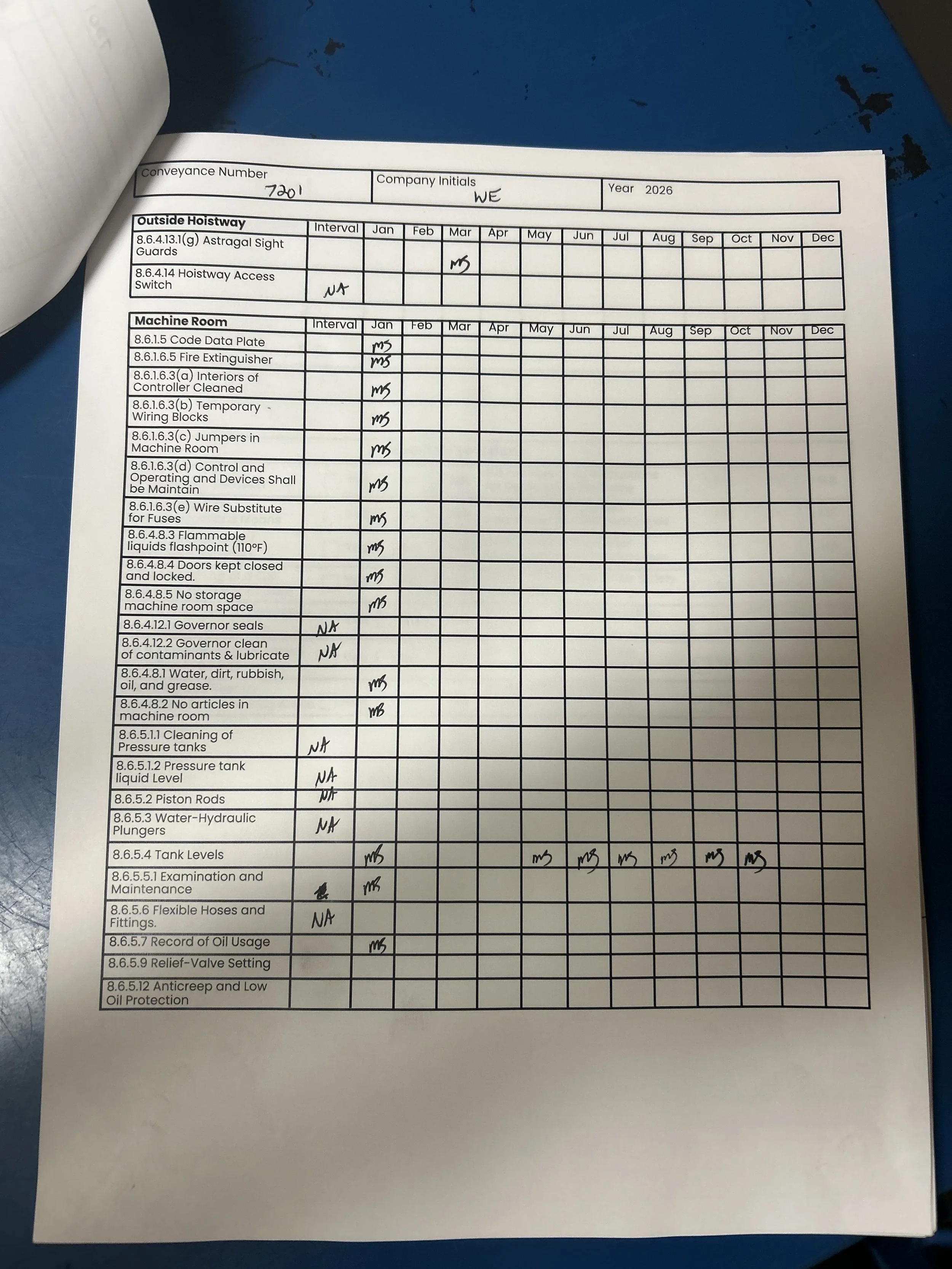
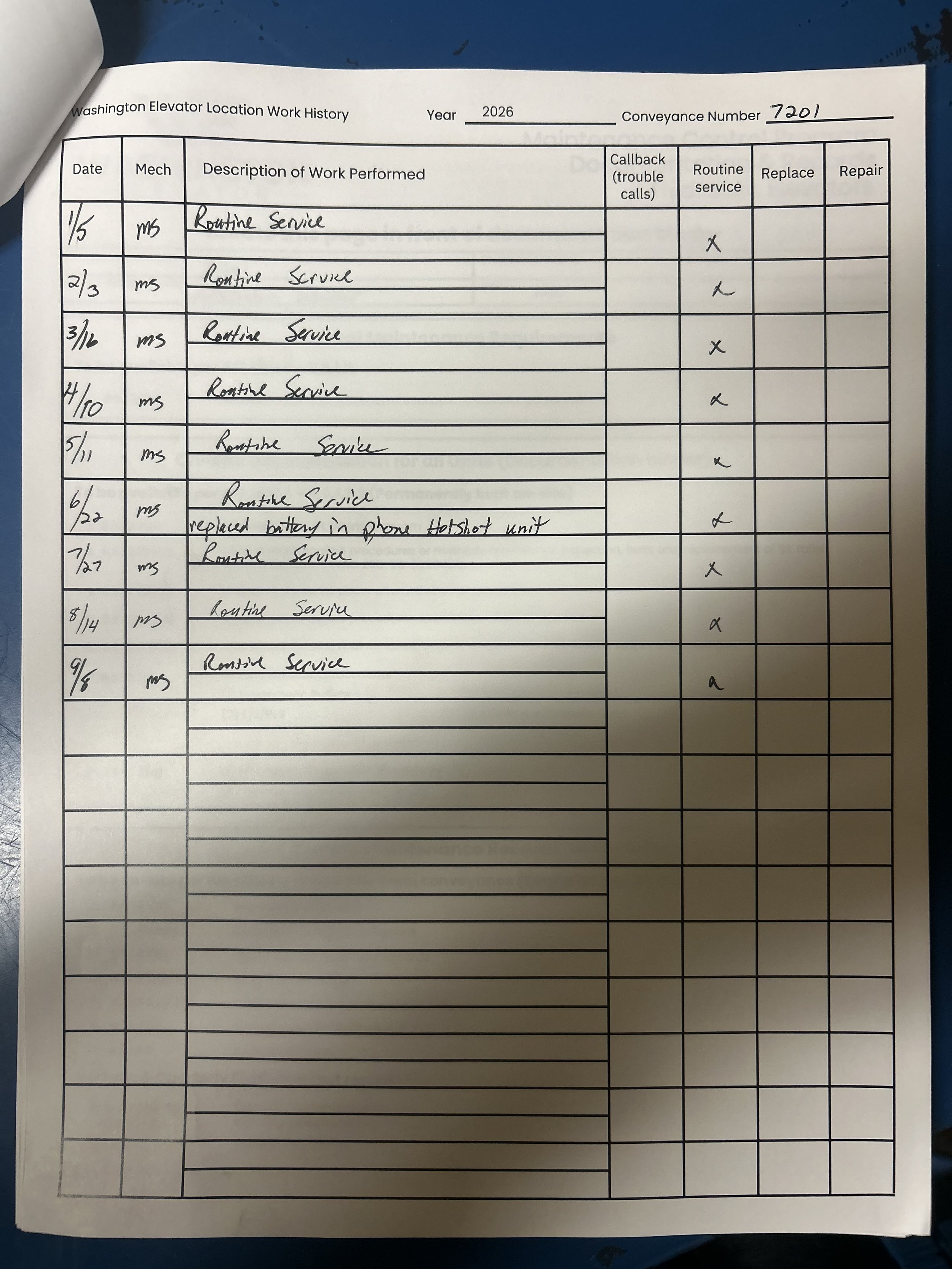
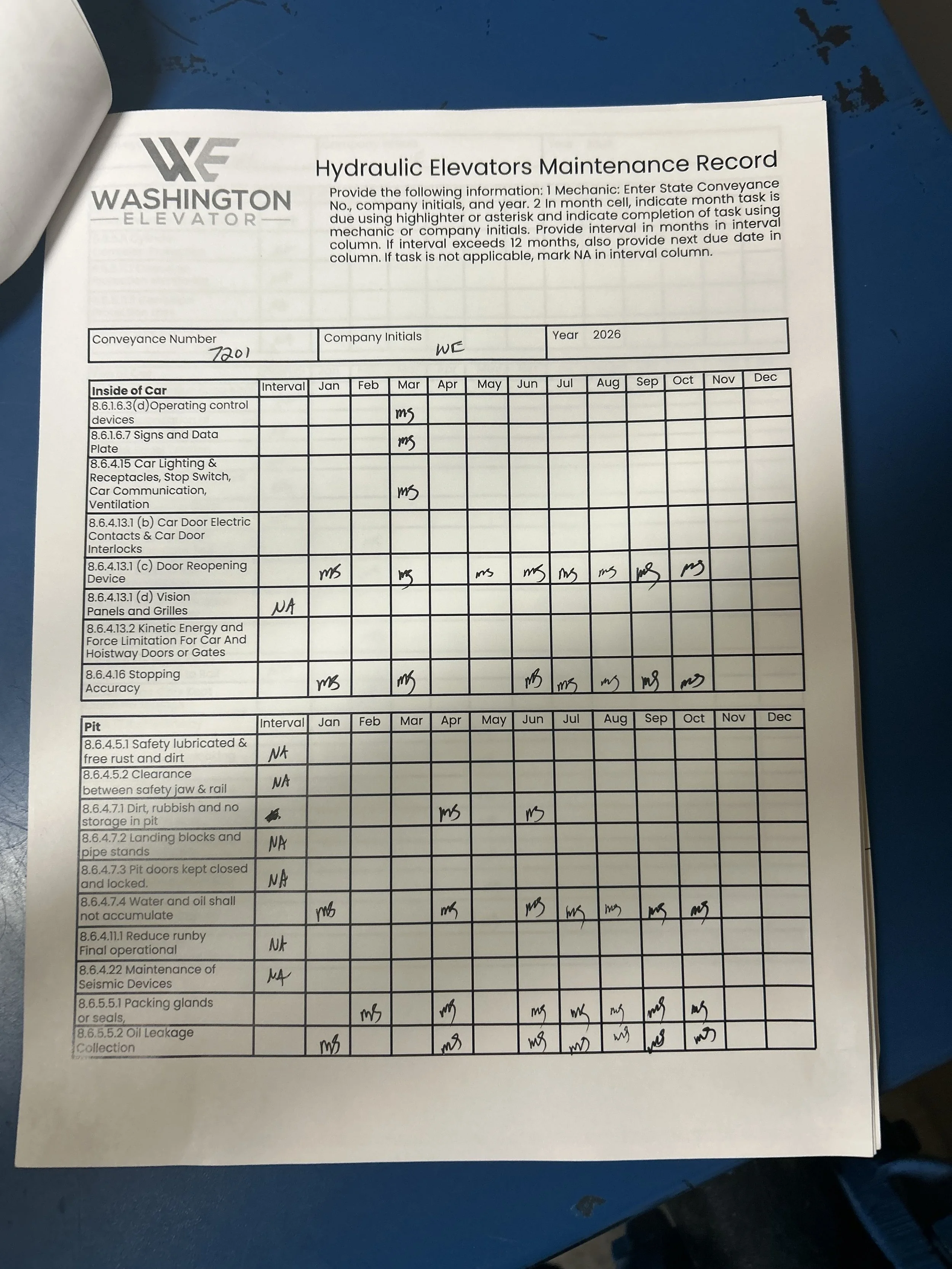
How can we commit to monthly maintenance visits?
Much of the elevator industry has moved to quarterly maintenance visits or less. We’ve stayed with monthly visits, and we make that possible by limiting the size of our service routes. Each of our mechanics is responsible for no more than 100 units, which gives them the time to visit every elevator every month and keep up with testing.
What can elevator maintenance records tell you?
Maintenance records provide valuable insight into an elevator's documented service history. Reviewing these records can help building owners identify potential gaps, ask questions, and better understand how their equipment is being maintained.
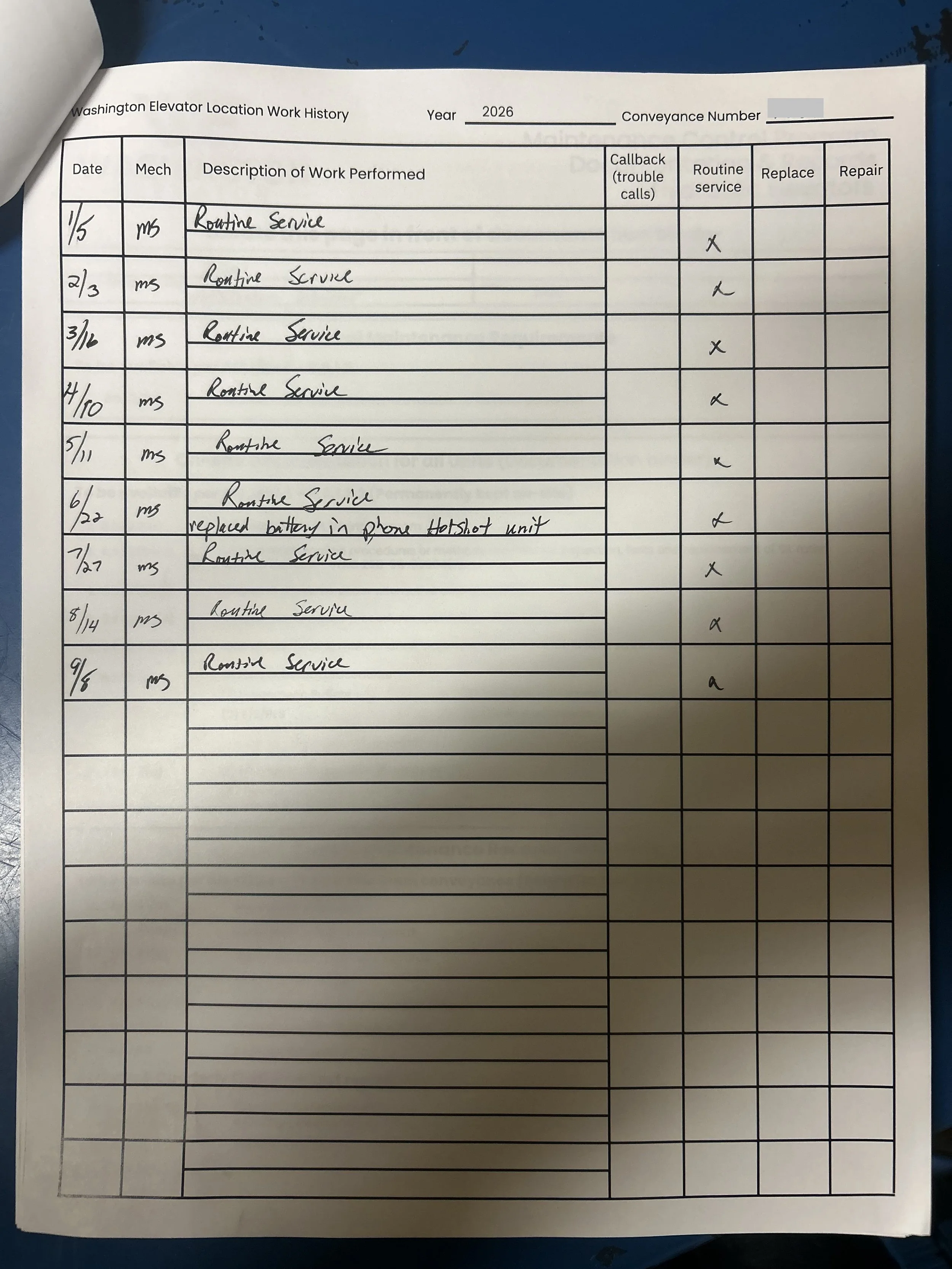
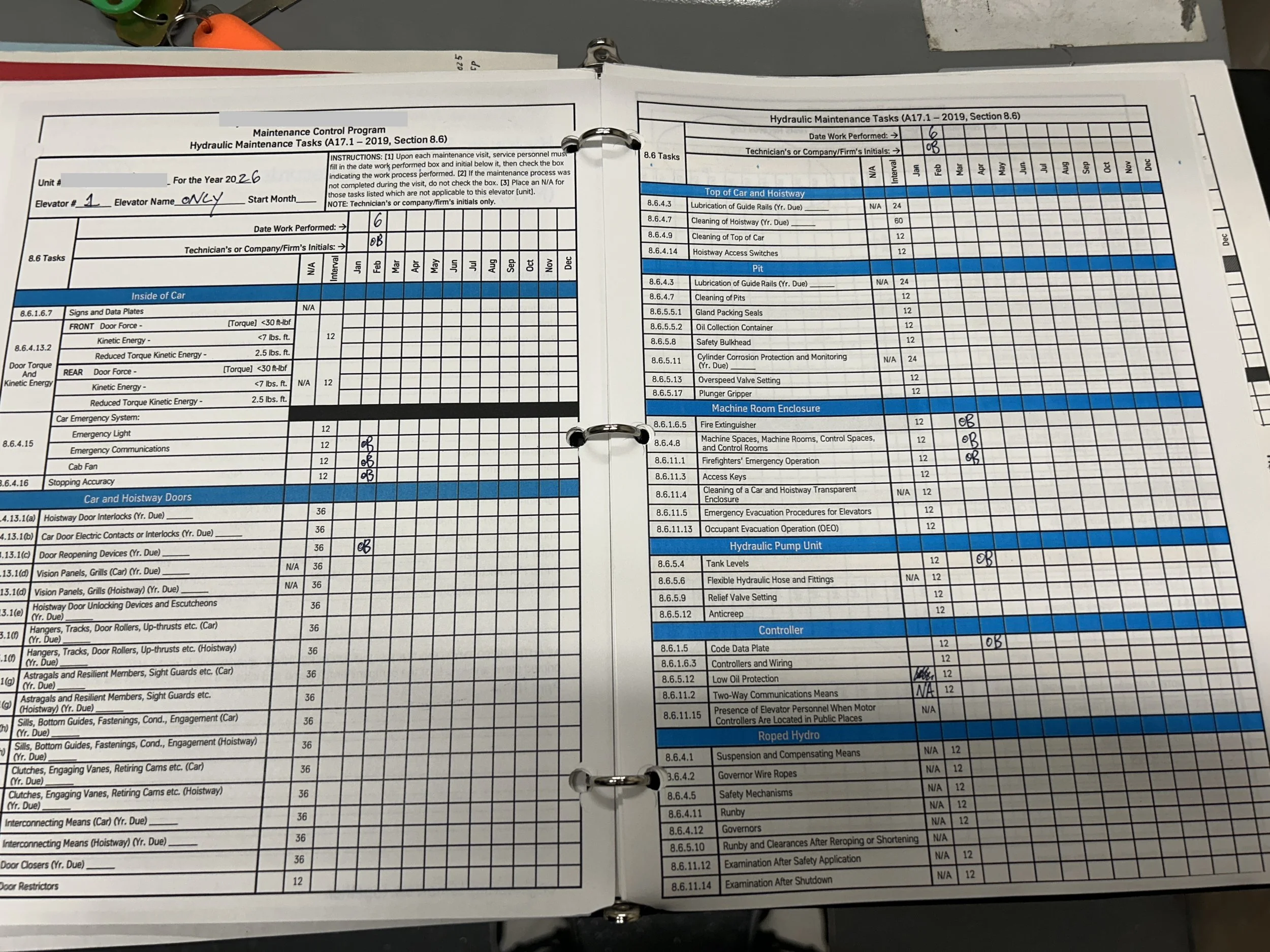
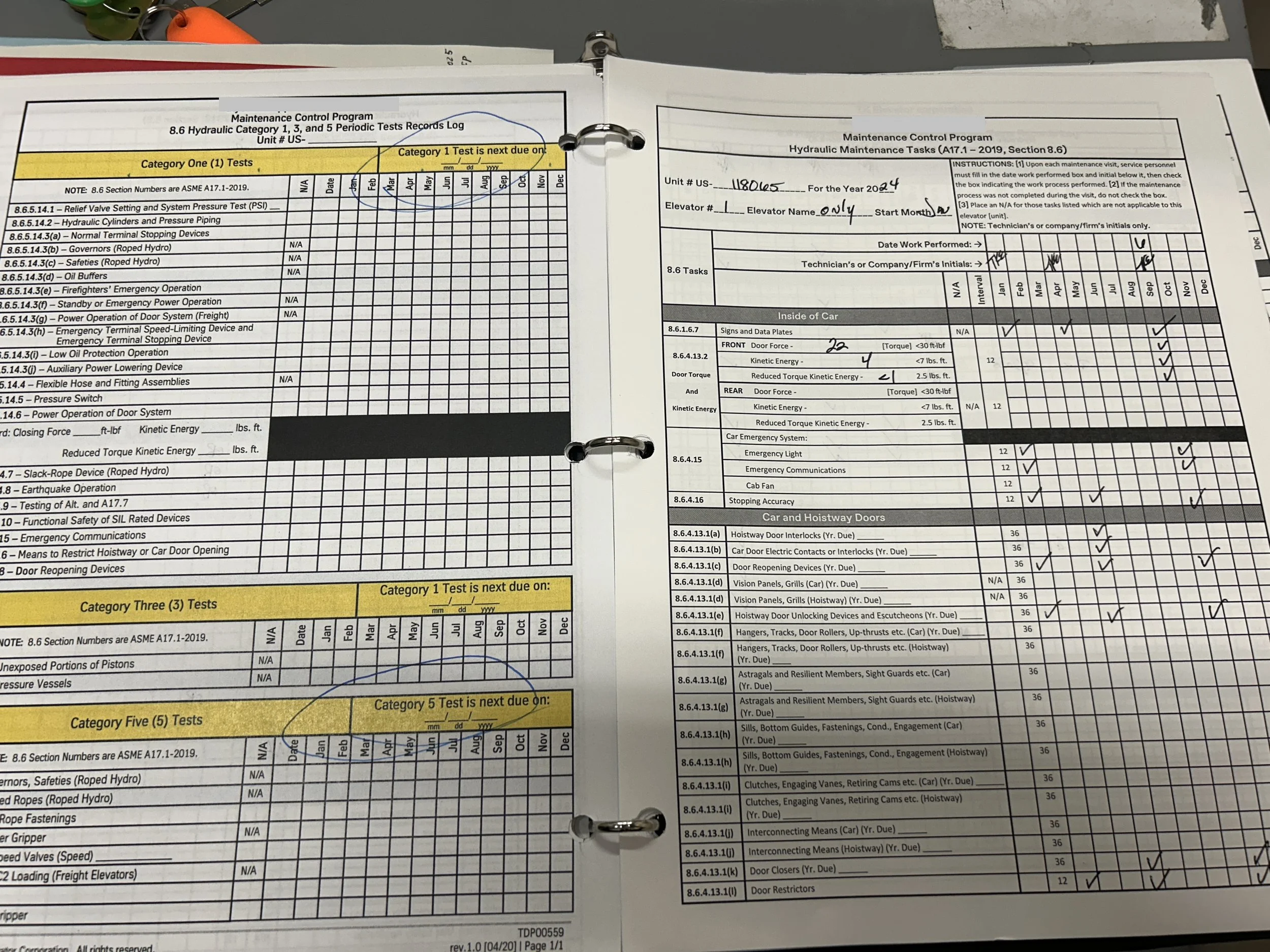
The following examples are from elevators Washington Elevator’s newest customers. Photographs were taken in September 2026, and identifying information has been removed.
Example 1: The available MCP records showed one preventive maintenance visit documented in 2026 and three visits documented in 2024. The records also indicated overdue required testing.
Example 2: The available MCP records showed three preventive maintenance visits documented in 2025 and two through September 2026.
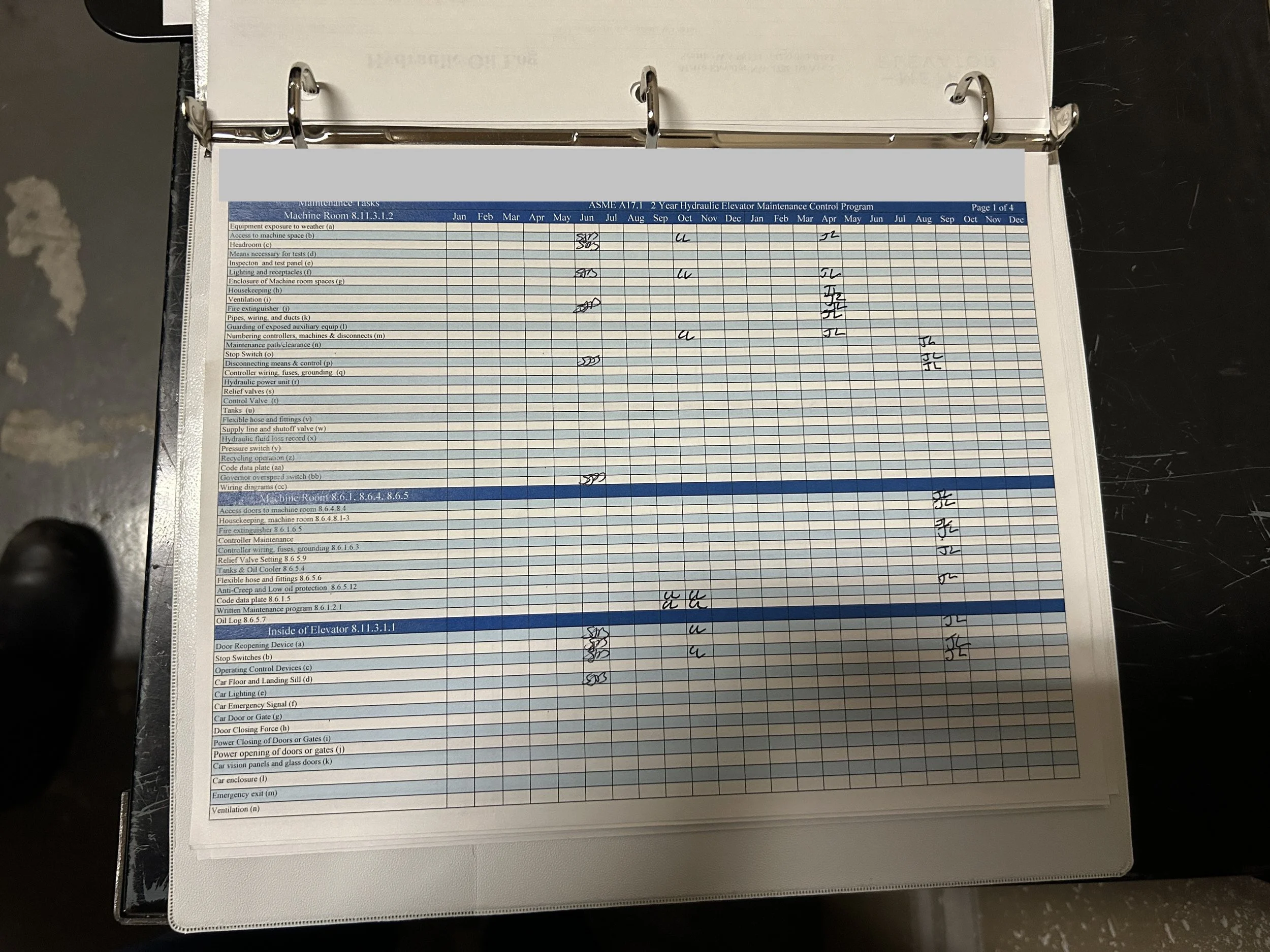
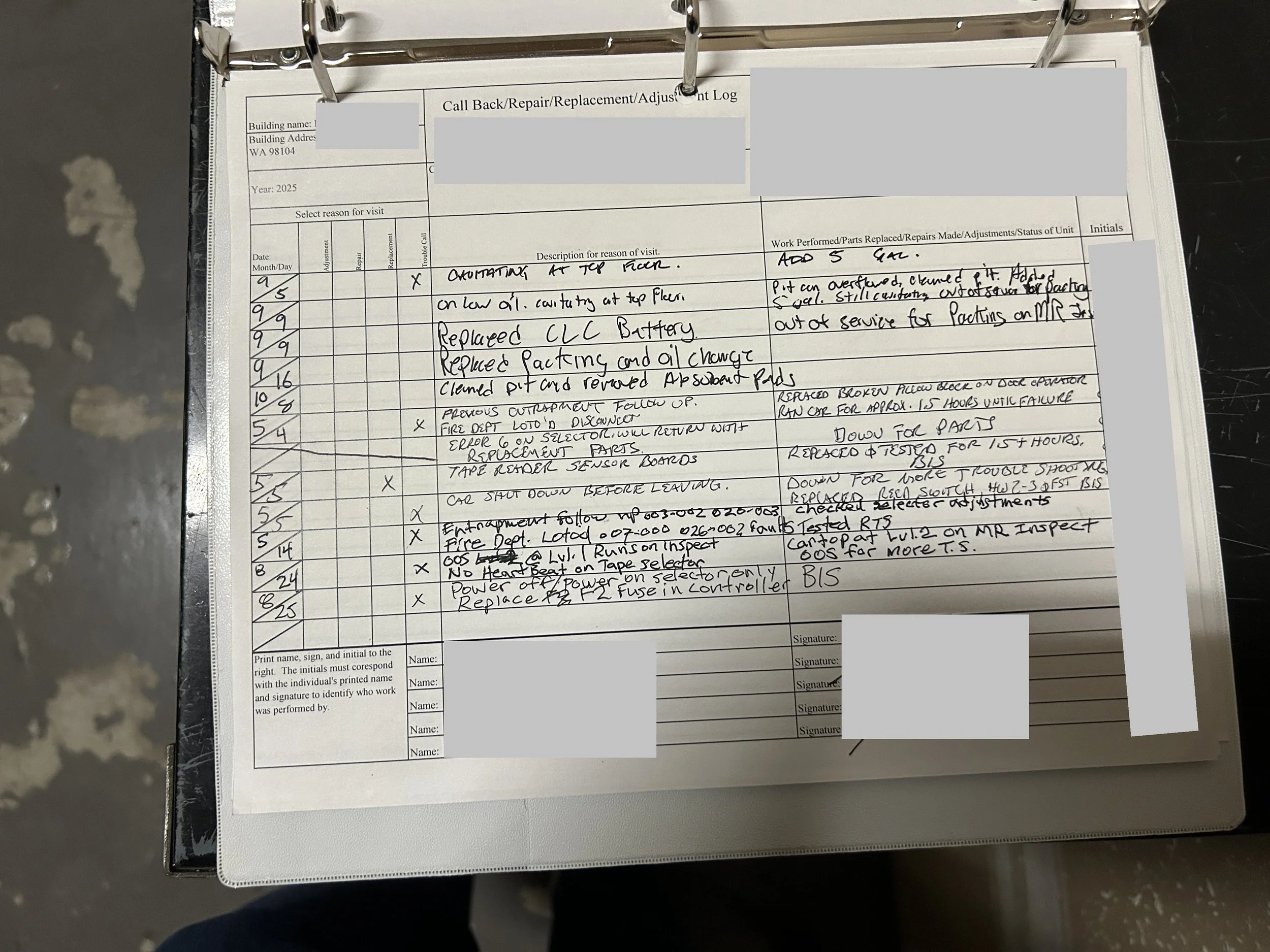
These examples highlight why reviewing maintenance records matters. The number of documented visits does not necessarily establish the total maintenance performed, but gaps in documentation are worth understanding and addressing with your maintenance provider.
Why does consistent elevator maintenance matter?
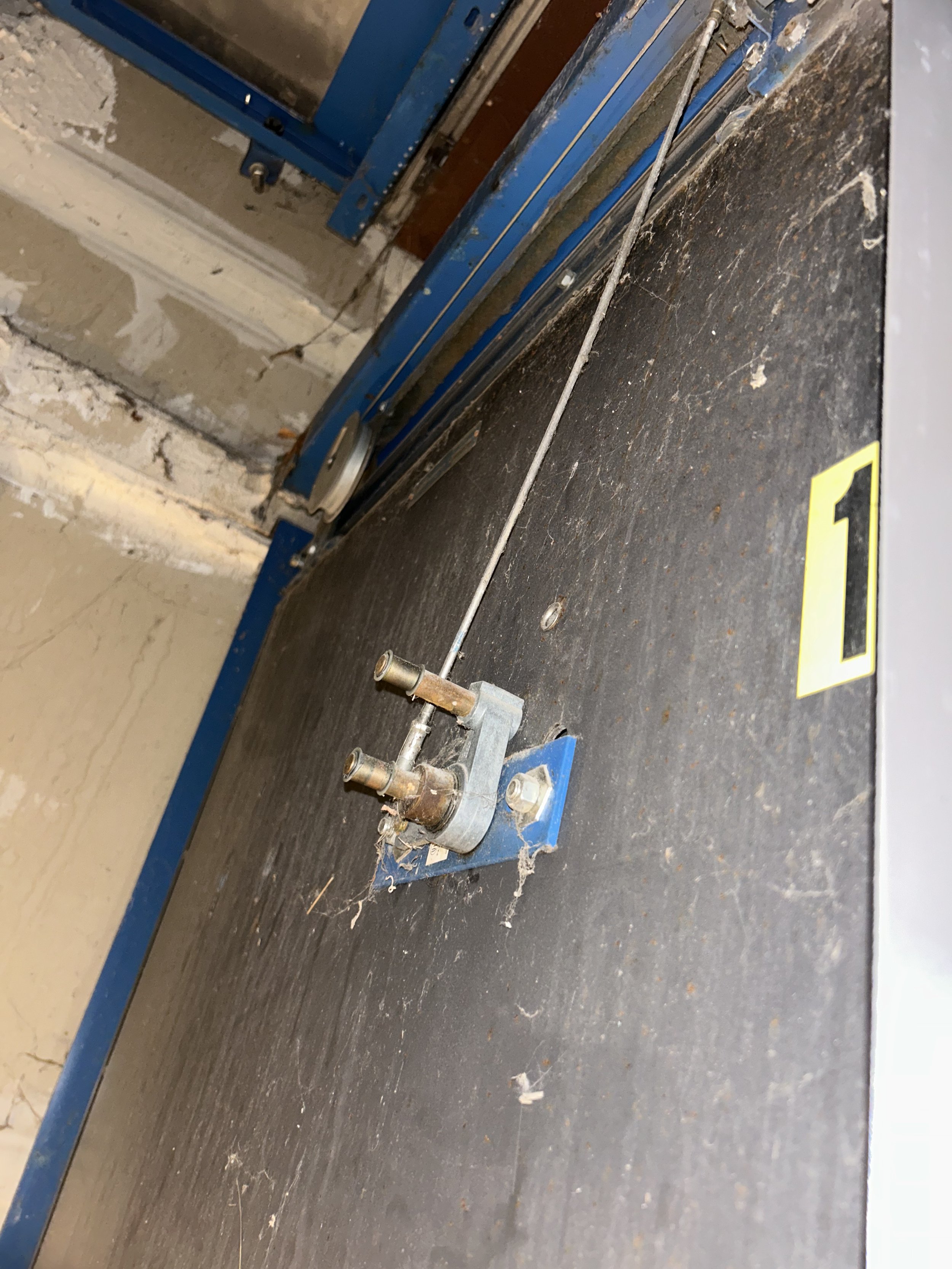
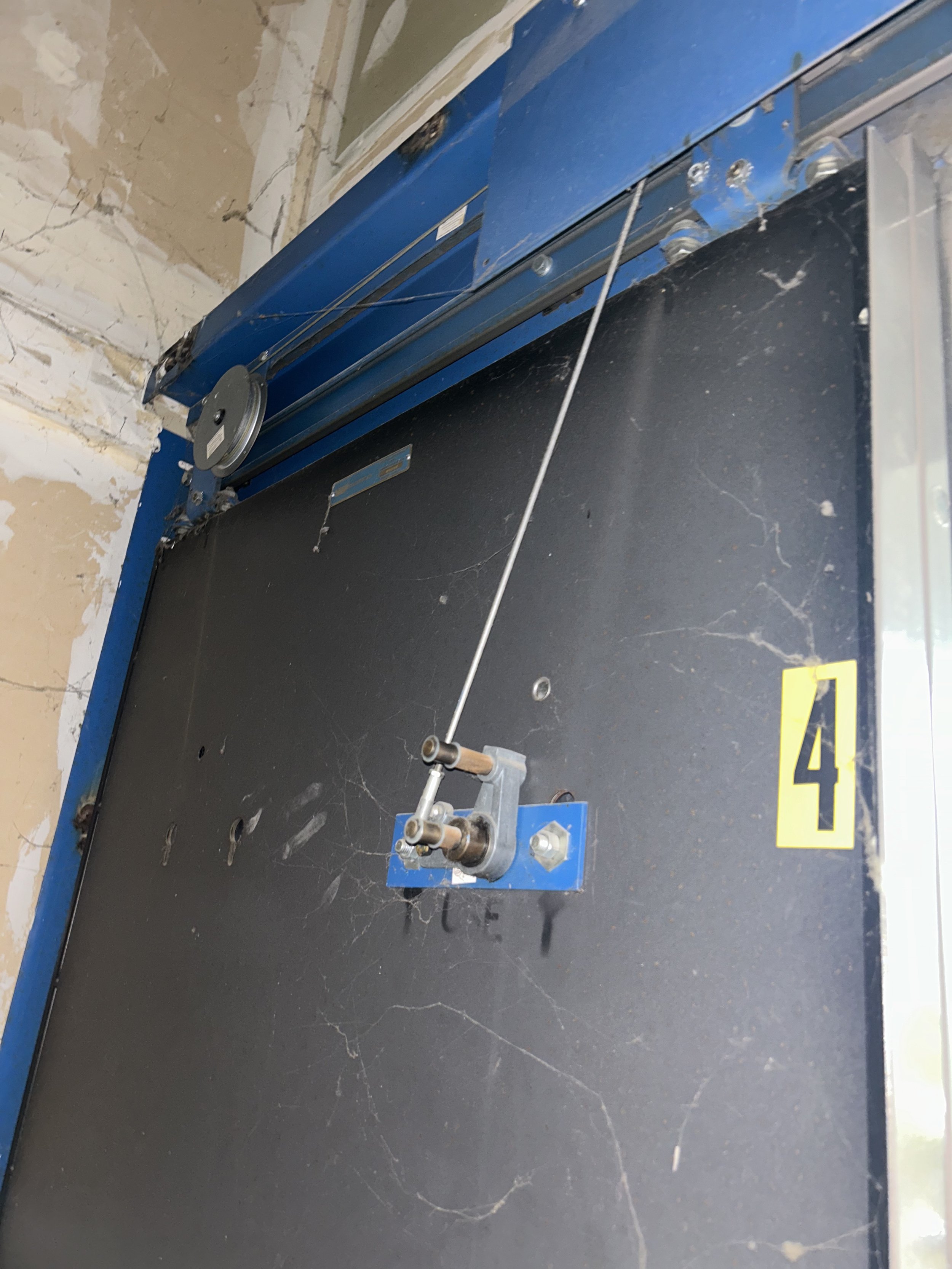
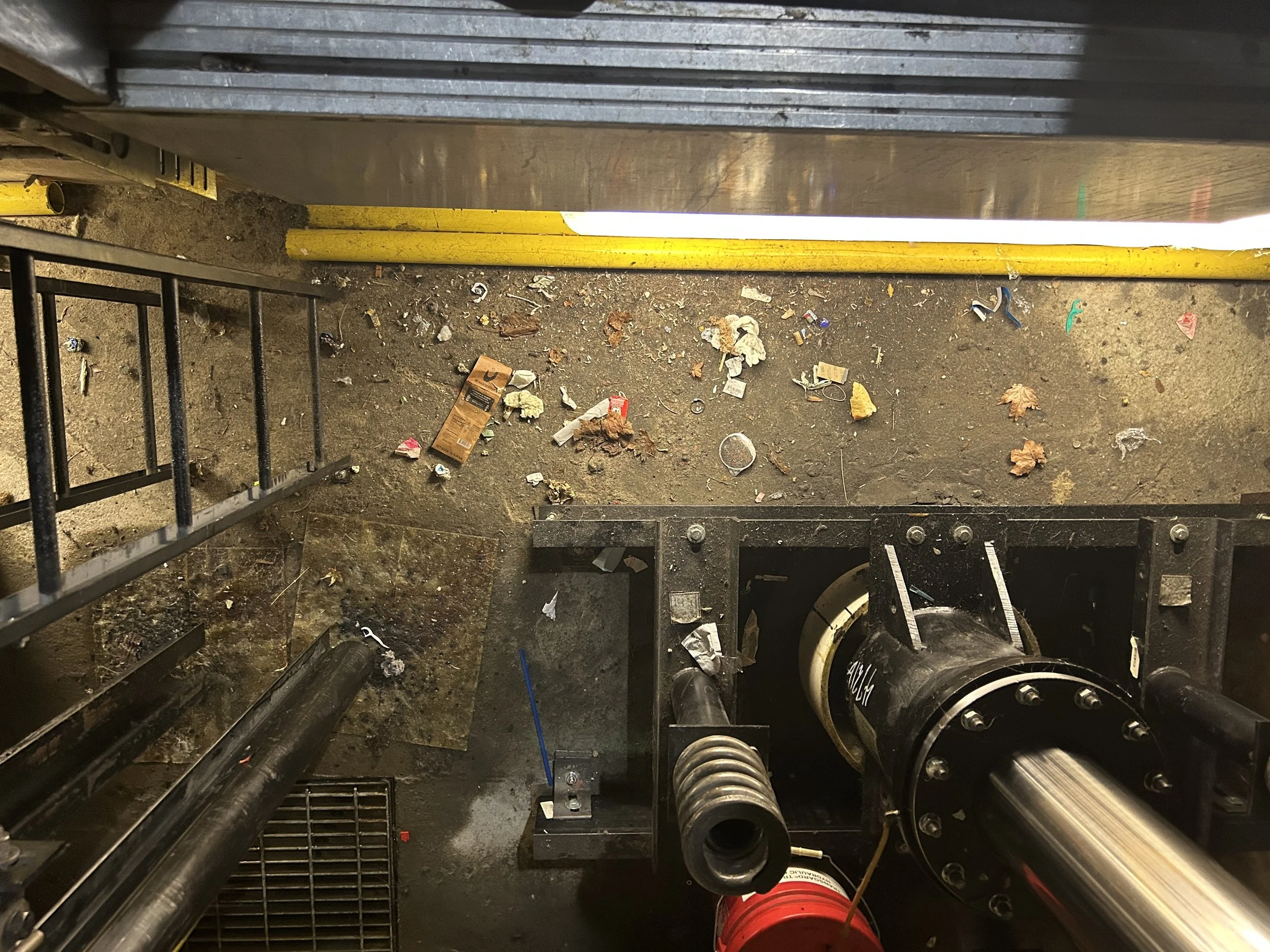
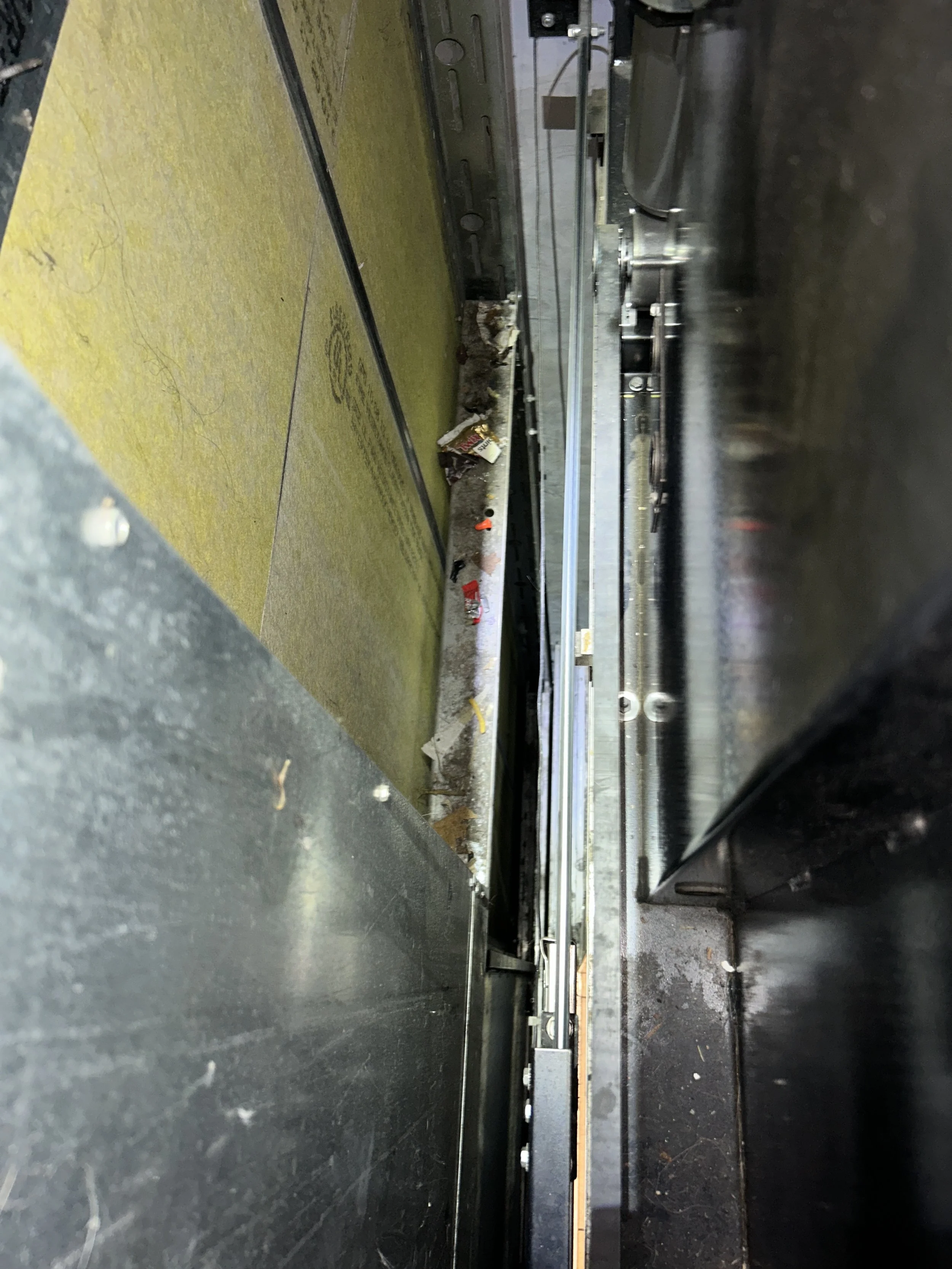
Regular maintenance plays an important role in elevator safety, reliability, and long-term equipment performance. During a recent site survey, Washington Elevator observed missing hoistway door pickup rollers at both the top and bottom floors of an elevator, along with cobwebs throughout the hoistway. At another location, we observed accumulated dust and debris in the hoistway. Conditions like these deserve attention. Depending on their location and severity, missing or damaged components and accumulated debris can affect elevator operation and reliability.
The takeaway: Building owners should understand their maintenance program, review available records, and address equipment concerns proactively. Consistent maintenance, accurate documentation, and open communication all contribute to a safer, more reliable elevator.
How well do you know your elevator maintenance agreement?
Building owners and property managers: Here are four simple ways to stay informed about your elevator maintenance program.
Understand your contract. Review the scope of services, maintenance frequency (if specified), contract term, and renewal provisions.
Ask for a maintenance plan. Your provider should be able to explain the service schedule and what maintenance activities are included.
Review your maintenance records. Check your Maintenance Control Program (MCP) which should be in the elevator machine room, and any other available service records to better understand the maintenance being performed.
Verify your testing and inspection status. Confirm required testing is current and any outstanding inspection items with the City of Seattle or Washington State L&I are being addressed.
An informed building owner is an empowered building owner. Understanding your maintenance program helps support elevator safety, reliability, and accountability.
Frequently Asked Questions
How often should an elevator be maintained?
Frequency depends on the age, use, environment and quality of equipment. And, of course, your contract. While service schedules vary among providers, Washington Elevator performs preventive maintenance on every unit monthly.
Where can I find my elevator’s maintenance records?
In the Maintenance Control Program (MCP), are required by code to be kept in the elevator machine room for seven years.
How quickly does Washington Elevator respond to service calls?
When you place a service call, a local mechanic will call you back within 15 minutes of receiving the request.
What happens when I switch to Washington Elevator?
Every new customer starts with a kickoff call. We review expectations, introduce your mechanic and key contacts, and explain how service calls, maintenance, testing, and inspections will be coordinated.
Does Washington Elevator require long-term contracts?
No. We offer short-term maintenance agreements because we believe in earning our customers' business through consistent service and communication.
Does Washington Elevator provide services beyond maintenance?
Yes! Washington Elevator provides comprehensive elevator services, including preventive maintenance, repairs, code compliance, required testing, and elevator modernization.
What areas does Washington Elevator serve?
Washington Elevator serves customers throughout much of Washington state, including King, Pierce, Snohomish, Skagit, Whatcom, Island, San Juan, Kitsap, Clallam, Jefferson, Mason, Thurston, Grays Harbor, Pacific, Lewis, Clark, and Cowlitz counties in Western Washington. Our service area also extends into Central and Eastern Washington, including Spokane, Whitman, Benton, Franklin, Yakima, Kittitas, Grant, Chelan, Douglas, and Walla Walla counties. Contact us to confirm service availability in your area.
Have questions about your elevator maintenance program?
Washington Elevator is here to help you understand your equipment's maintenance needs, service requirements, and available options. Contact our team to start a conversation!