

What is a Hydraulic Elevator Modernization? Hydraulics.
What is the hydraulic system? Hydraulic elevators us hydraulic pressure to raise and lower a hydraulic piston. The hydraulic system consists of a power unit (pump, motor, valve, tank) connected to a hydraulic jack(s) or cylinder(s) by a run of pipe. There are devices in the oil line to comply with code or improve performance including shutoff valves, overspeed (AKA rupture) valves, muffler/silencers, isolation valves. These are connected primarily using Victaulic fittings and sometimes threaded fittings.
When should I update my hydraulic system? Let’s look at the different systems in more detail
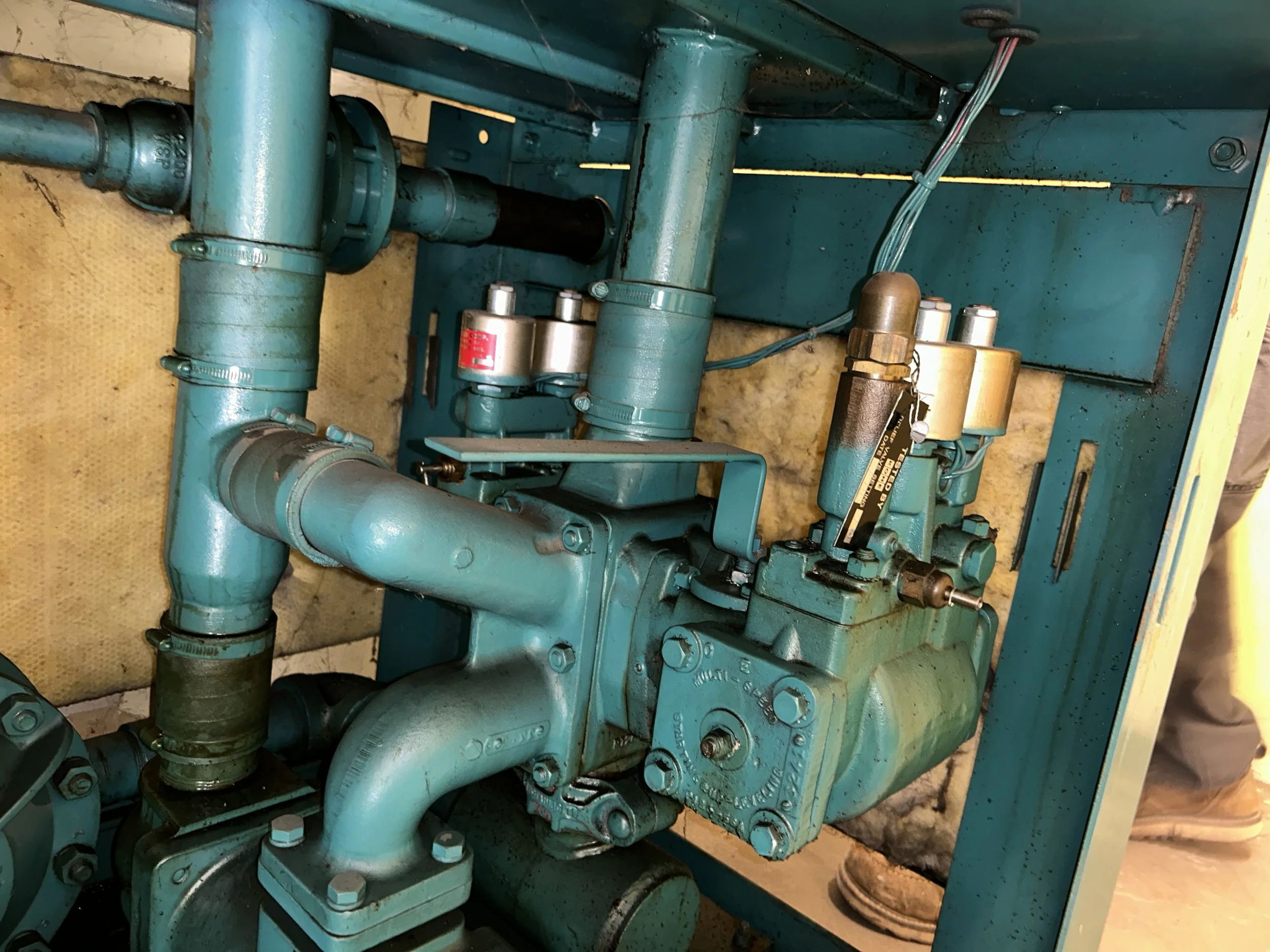
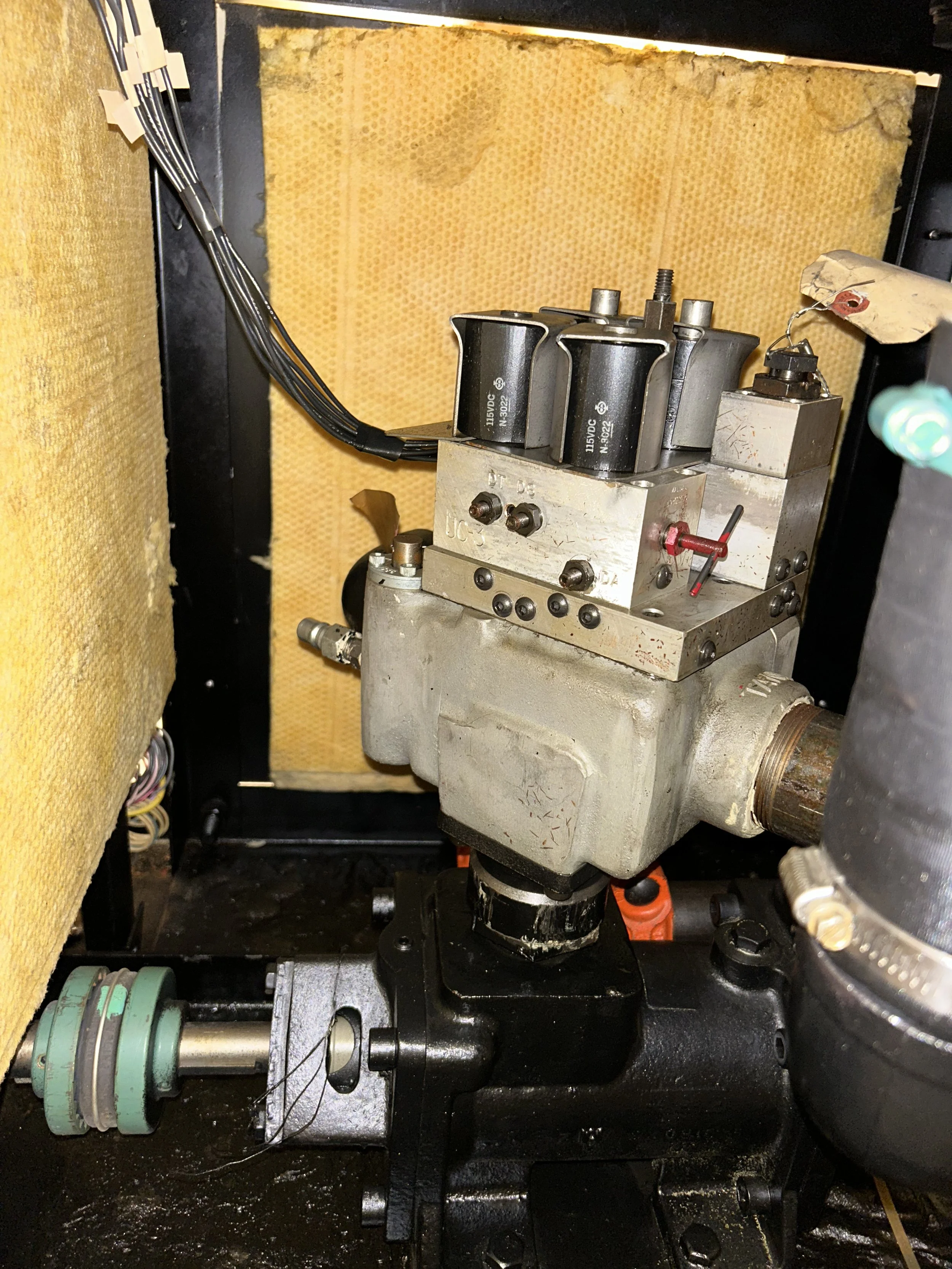
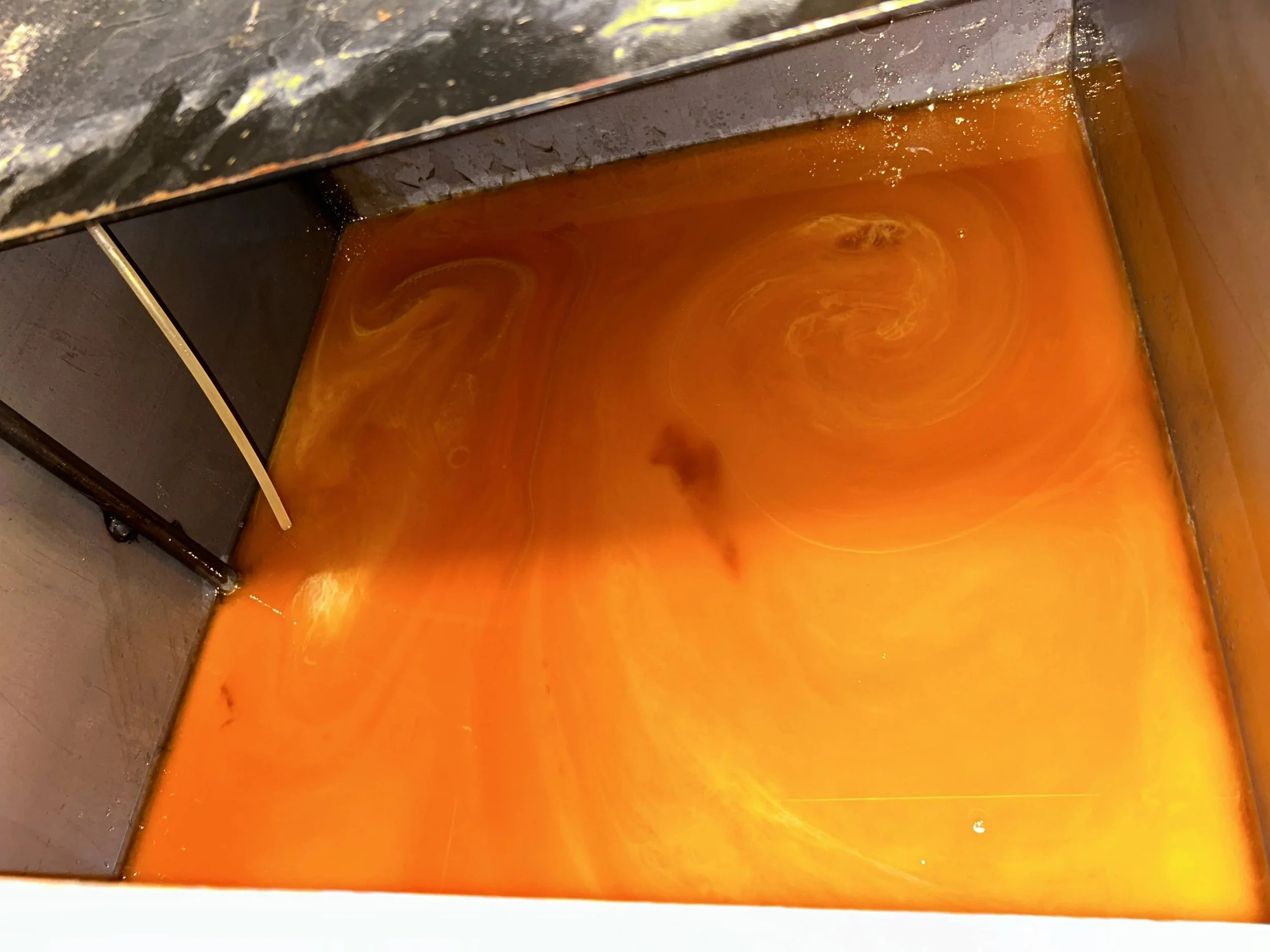
POWER UNIT. The power unit is the muscle of the elevator. Like any mechanic system, it can wear out. The various components can be rebuilt or replaced as they wear. But these repairs can be costly and result in unexpected downtime. Replacement recommendations will depend on the age, the support level of the existing components and the current condition. Your service provider can provide information on this. To take it further, you can have the oil tested to see what condition it is in.
HYDRAULIC JACK. You can read more about jacks in my previous blog article here. If you have a single-bottom cylinder (installed prior to ~!972), you should absolutely plan to replace the jack, as this is a potential safety hazard. Elevators installed without a PVC sleave (installed prior to ~1990) are worth considering.
OIL LINE. If you update your power unit and/or jack, you are required by code to bring the oil line up to current code. That’s two shutoff valves (one in the machine room and one in the pit) and an overspeed valve in the pit. If you don’t have them already, it’s worth adding. But they will definitely be added during a major upgrade or modernization.
What’s included?
POWER UNIT. Power units are often replaced during a modernization, but they don’t have to be. This can be retained if in good condition and replaced later. This will spread out the capital expense and downtime. Depending on the elevator capacity, rise, etc., you can sometimes upgrade an older dry power unit to a submersible unit.
HYDRAULIC JACK. Depending on the original install date, jacks are often retained. See my note above about when they should be included.
OIL LINE. A modernization will trigger certain code requirements – shutoff and overspeed valves. Mufflers/silencers come standard. Other things like isolation valves and wye-strainers (standard on all Washington Elevator installations) can also be included. These are good options to minimize noise / vibration transmission and for future service. When updating the hydraulic system, it’s a best practice to replace all Victaulic gaskets and the jack seal (standard on all Washington Elevator installations).
OIL. I’ve written about oil here. It is a best practice to replace the oil when upgrading the power unit and/or hydraulic jack.
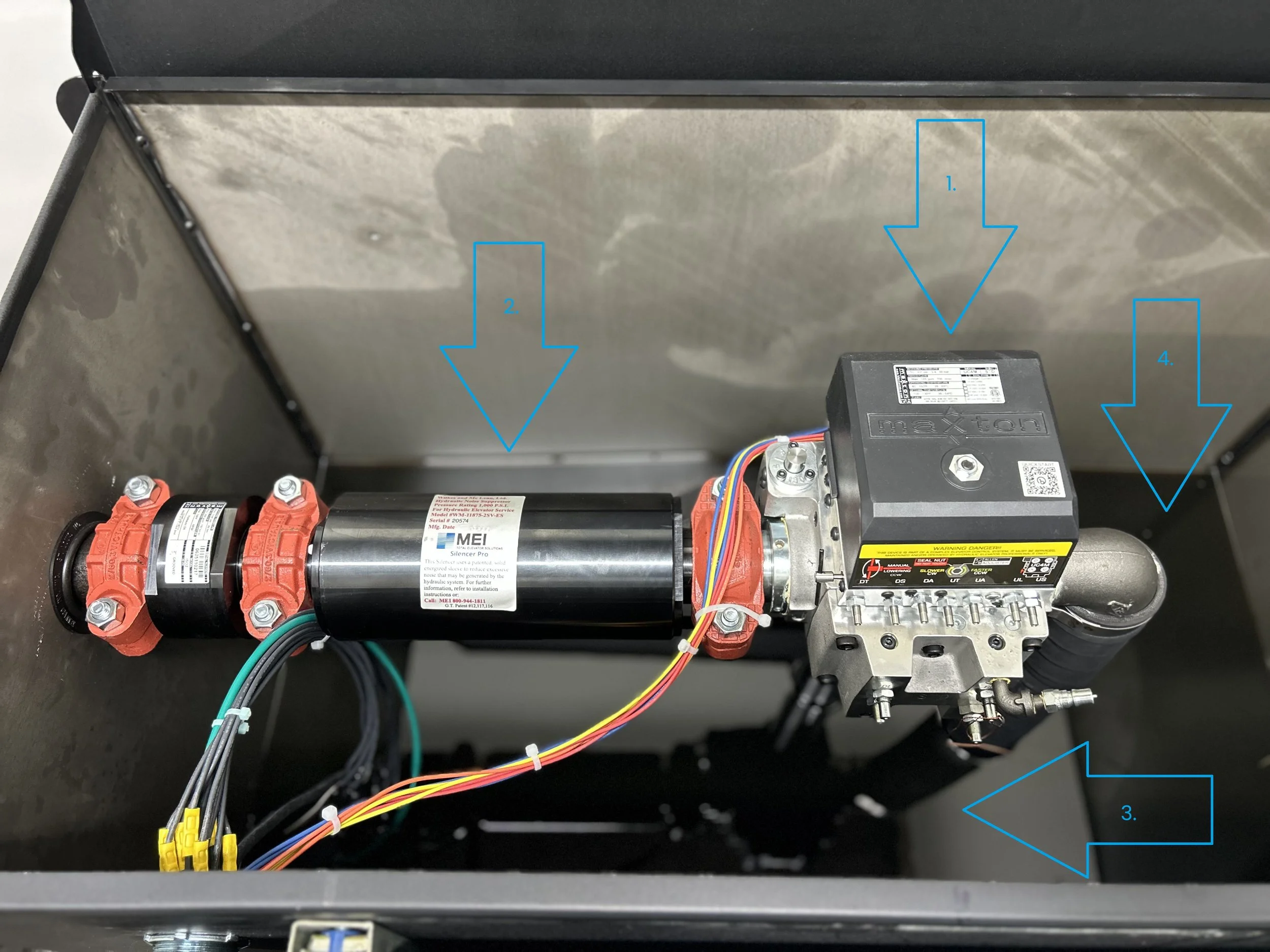
MEI Submersible Power Unit
Here’s a modernized power unit with the following:
Maxton Valve. Maxton Manufacturing Company is known for high quality US made hydraulic elevator control valves for the new construction, OEM, modernization, and/or elevator repair markets. The Maxton UC4 hydraulic elevator control valve is our most common elevator control valve for low flow hydraulic elevator applications. The UC4 valve was designed to meet the demands of the hydraulic elevator industry, featuring individualized adjustments, high efficiency solenoids, an integrated relief valve and more.
Silencer. MEI’s energized sleeve line of silencers use a proprietary, hydraulically stable urethane foam to effectively treat hydraulic noise. The energized sleeve locally reduces the effective stiffness in the hydraulic system exactly like the bladder in traditional hydraulic silencers or the expansion chamber in a muffler. No regular maintenance is required with the new bladderless design. Silencers reduce system noise throughout the property. These come standard on all Washington Elevator power unit installations. [Upgrade]
Pump and Motor. As with all submersible power units, the pump and motor are installed under the oil. Not great for pictures, but they’re both there.
Hydraulic Fluid. This modernization included all new hydraulic fluid. This is standard for all Washington Elevator modernizations. [Serviceability Improvement]
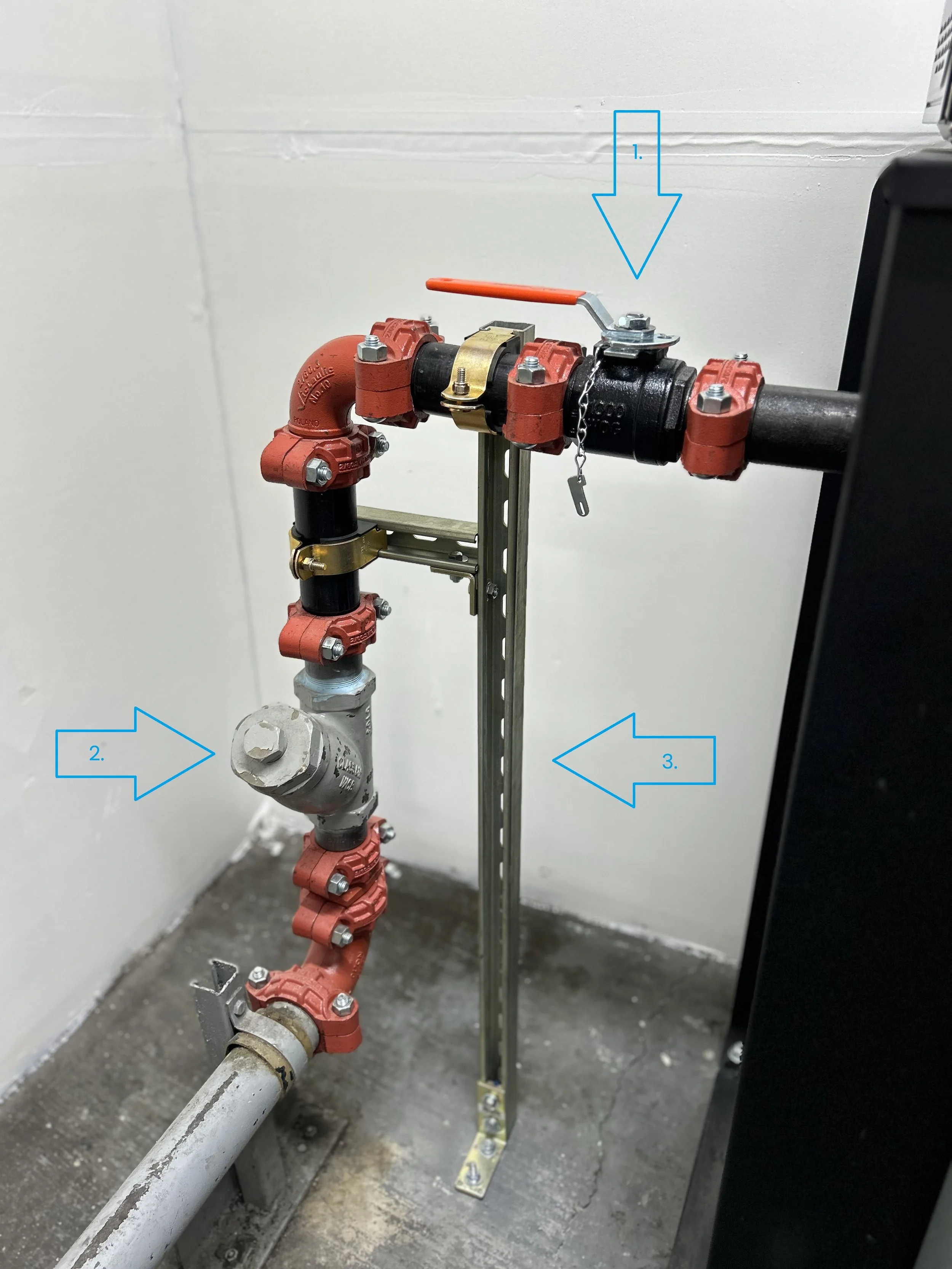
Oil line in machine room
Shutoff Valve. To comply with current code oil lines must include two shutoff valves - one in the machine room and one in the pit. This is the machine room shutoff valve. [Code required]
Wye-Strainer. Not required, but included for future maintenance. The wye-strainer includes a screen that protects debris from reaching the valve. The cleanout allows for easy maintenance. [Serviceability improvement]
Pipe Stand. Also required by code, each section of pipe must be supported. This is included in all Washington Elevator modernizations. [Code required]