

Modernization Journey - FINAL!
After six short weeks, Jon successfully passed inspection on the first attempt! If you need a refresher on the work that occurred to get us to this point, you can catch them here:
I’ve finally been able to visit the project to take some pictures. You might be asking yourself…What is included in a modernization? During a modernization, most major components are upgraded or replaced. Some are required by code. Others are replaced for long-term reliability and serviceability. When making the investment, most owners elect to address the entire system at once. Many components are retained. Often for budget reasons. These are systems that don’t wear out and it does not make sense financially to change them. This blog will highlight what was upgraded and what was retained. I’ll also try to indicate if the are required by code, optional upgrades or serviceability improvements.
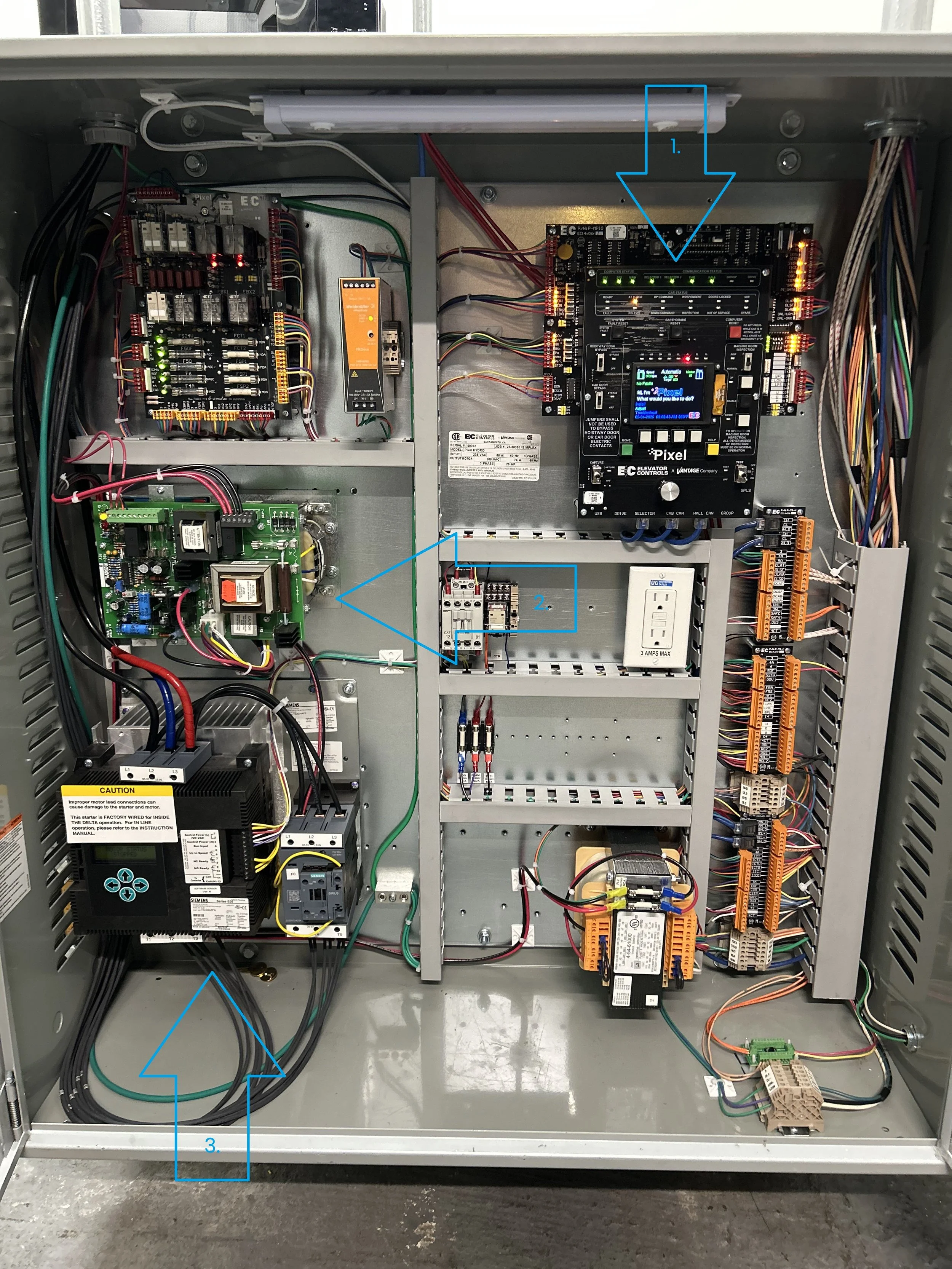
Elevator Controls Pixel controller.
User Interface. Washington Elevator uses non-proprietary controls for all installation. This EC Pixel controller incudes a full-color LCD screen that is simple to read, easy to learn and intuitive to navigate. This is one of three points of access. The other interfaces are in the car operating panel and car top.
Battery Lowering. A Reynolds & Reynolds battery backup helps to assure that power will be applied to an elevator during a power outage so passengers may safely exit the elevator car. It provides enough power for the elevator to descend to the next landing and open the doors, preventing entrapments.
Solid-State Starter. All Washington Elevator modernizations come standard with a Siemens solid-state starter. Benefits include smooth starting, phase loss / reversal protection, noise reduction and improved diagnostics. View my past post about solid-state starters here. [Upgrade - although you’d be hard pressed to find a new controller without a solid-state starter]
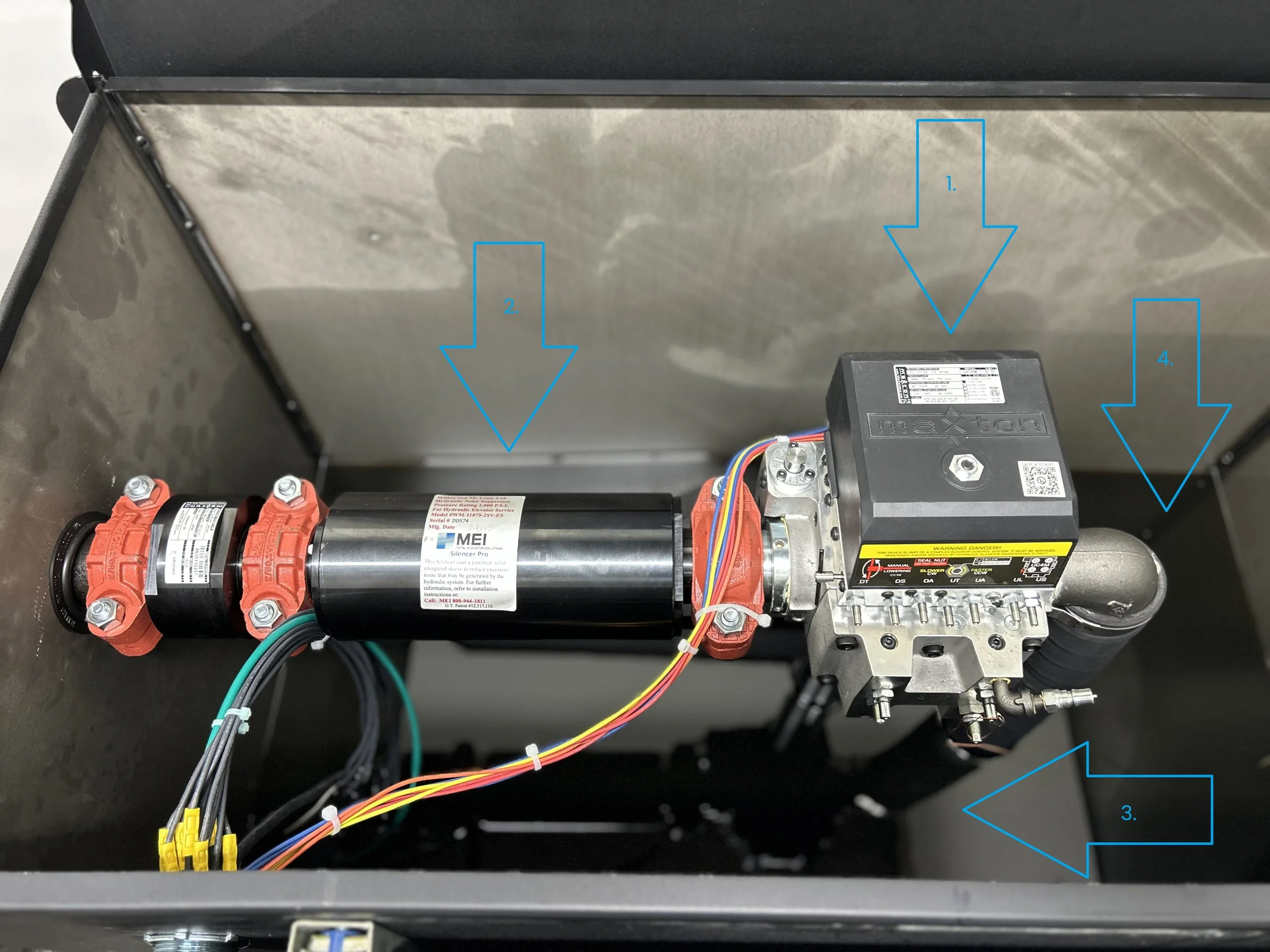
Minnesota Elevator (MEI) submersible power unit
This elevator modernization includes a submersible power unit. Submersible power units offer many advantages over dry units in the appropriate application. Submersible units are quieter, take up less space and require less maintenance / repairs over the life of the equipment. Here’s a summary of what is included in a new power unit.
Maxton Valve. Maxton Manufacturing Company is known for high quality US made hydraulic elevator control valves for the new construction, OEM, modernization, and/or elevator repair markets. The Maxton UC4 hydraulic elevator control valve is our most common elevator control valve for low flow hydraulic elevator applications. The UC4 valve was designed to meet the demands of the hydraulic elevator industry, featuring individualized adjustments, high efficiency solenoids, an integrated relief valve and more.
Silencer. MEI’s energized sleeve line of silencers use a proprietary, hydraulically stable urethane foam to effectively treat hydraulic noise. The energized sleeve locally reduces the effective stiffness in the hydraulic system exactly like the bladder in traditional hydraulic silencers or the expansion chamber in a muffler. No regular maintenance is required with the new bladderless design. Silencers reduce system noise throughout the property. These come standard on all Washington Elevator power unit installations. [Upgrade]
Pump and Motor. As with all submersible power units, the pump and motor are installed under the oil. Not great for pictures, but they’re both there.
Hydraulic Fluid. This modernization included all new hydraulic fluid. This is standard for all Washington Elevator modernizations. [Serviceability Improvement]
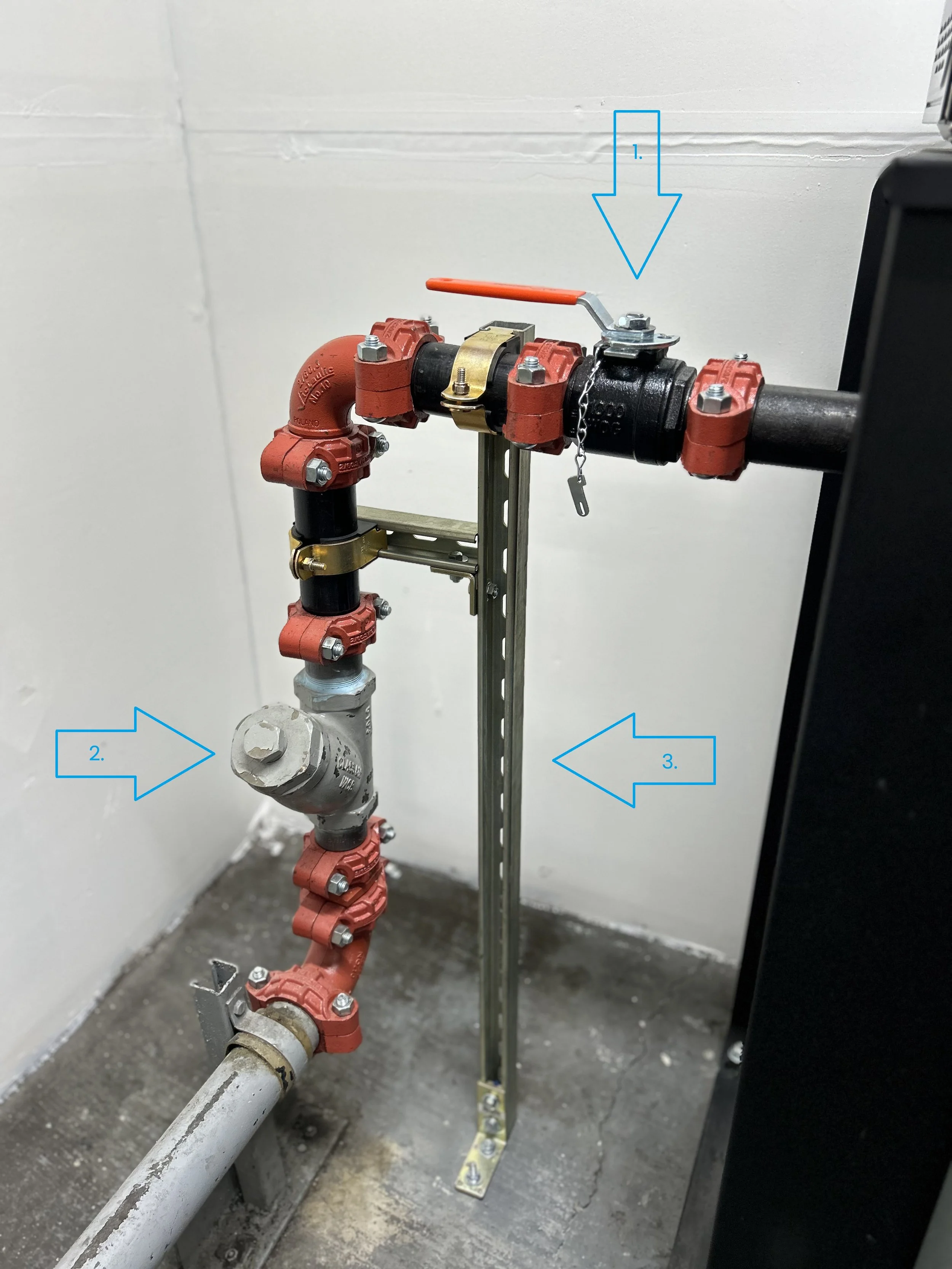
Hydraulic oil line
During modernizations, the oil line is often retained. However, to comply with ASME A17.1-2019 (current code), some modifications are required.
Shutoff Valve. To comply with current code oil lines must include two shutoff valves - one in the machine room and one in the pit. This is the machine room shutoff valve. [Code required]
Wye-Strainer. Not required, but included for future maintenance. The wye-strainer includes a screen that protects debris from reaching the valve. The cleanout allows for easy maintenance. [Serviceability improvement]
Pipe Stand. Also required by code, each section of pipe must be supported. This is included in all Washington Elevator modernizations. [Code required]
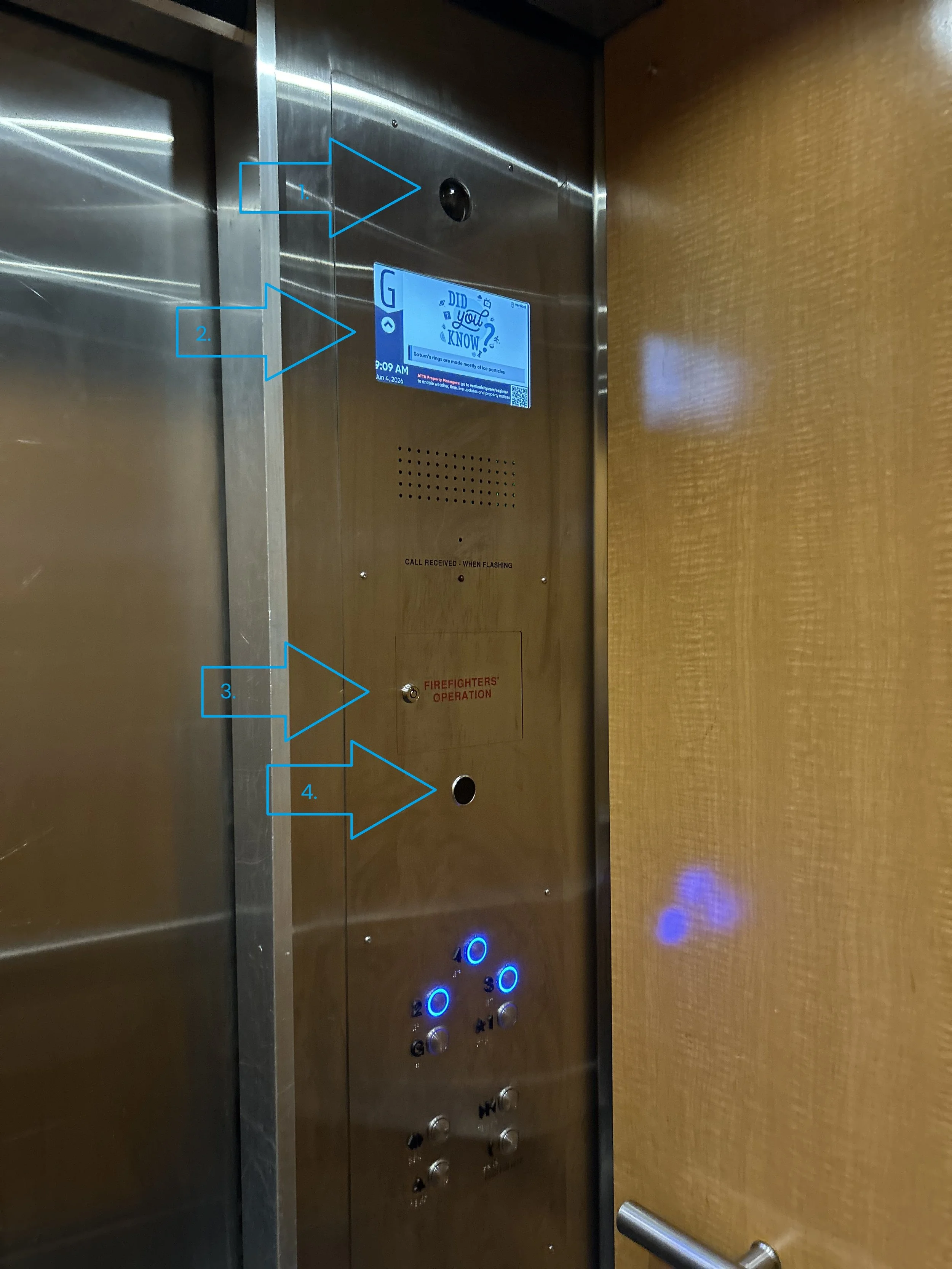
MAD Elevator car operating panel
Audio / Visual Communication - Camera. I’ve written about the new audio / visual communication requirements here. This is the camera that allows the dispatcher to view into the elevator. [Code required]
Matisse Screen. This screen has multiple functions. During normal operations, this is your position indicator. It also provides news and information, if desired. The building owner / manager can also post notifications here. During an emergency, this screen becomes part of the audio / visual communication system. It can be used to communicate with a passenger. Messages can be posted and responded to using the Door Open and Door Close buttons for “yes” and “no”. [Code required]
Firefighters Operation. Firefighters Operation (AKA Fire Service) key switches can be found behind this panel. When the elevator enters into firefighters operation, this panel will open, revealing the necessary key switches. [Code required]
Firefighters Indicator. This indicator will illuminate a fireman’s hat when the elevator is in Firefighters Operation. [Code required]
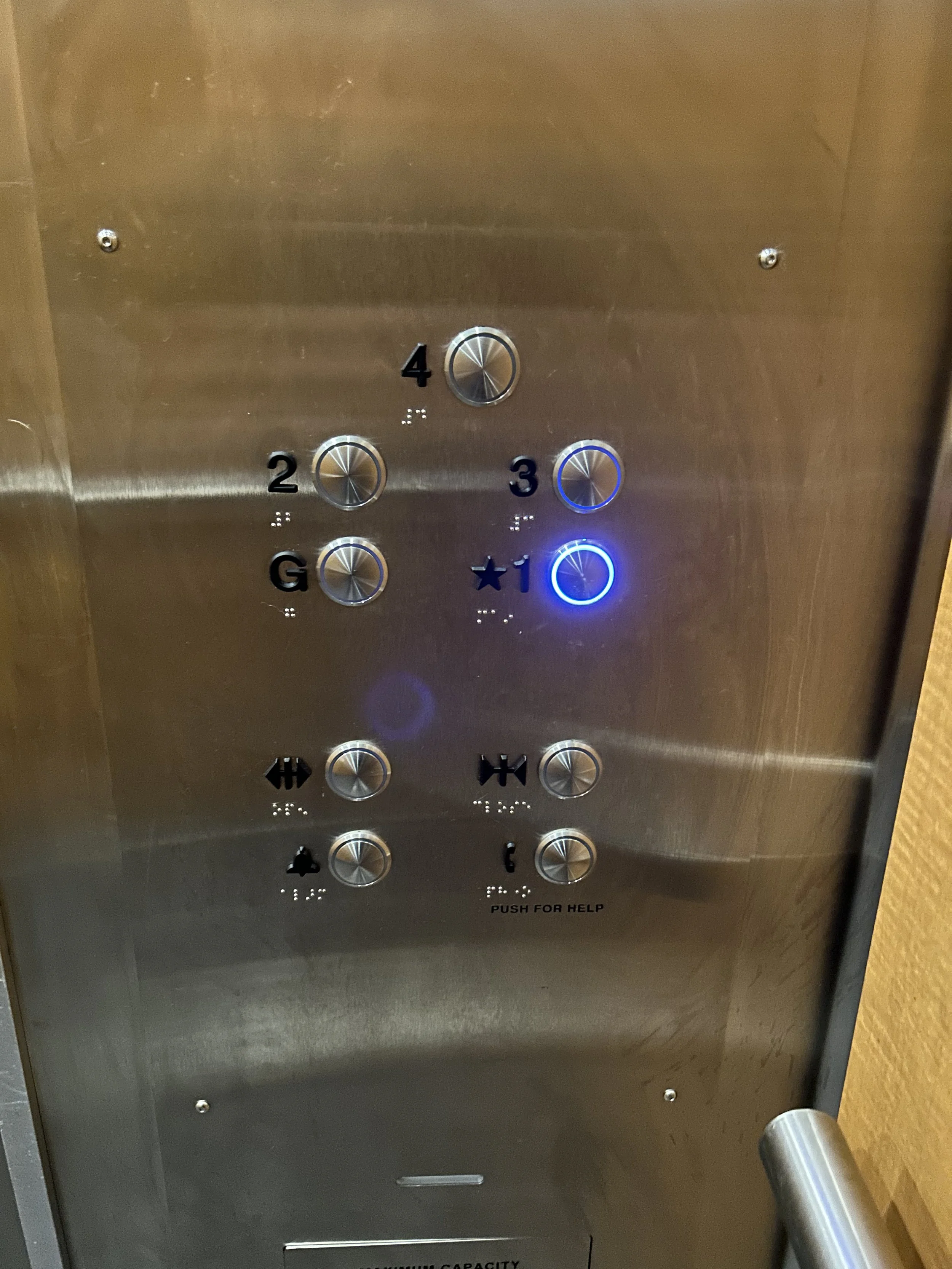
MAD Elevator fixtures
MAD Elevator is our preferred supplier for fixtures. They offer a variety of buttons and finishes. Their entire portfolio can be viewed and configured here. This customer selected the “Ritz” with a blue halo. I think it turned out very nice.
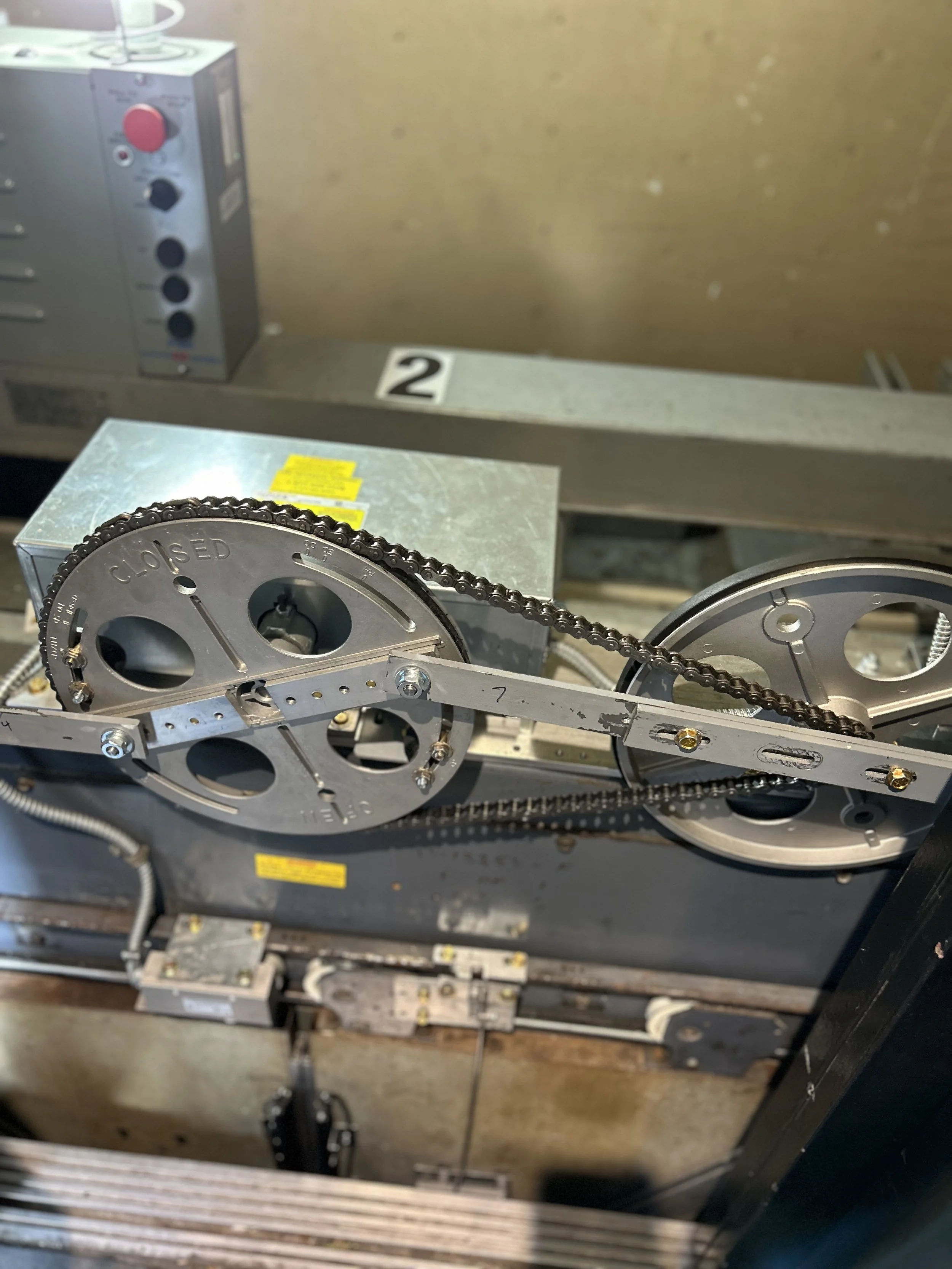
GAL MOVFR II door operator
Door operators are often the source of many service calls. Upgrading the door operator can provide dramatic improvements in overall operation and reliability. For generations, GAL has served the elevator industry as the supplier of chice by overing robust, non-proprietary solutions. We utilize GAL door operator for most applications. In this case, we installed an MOVFR II. This rides on the car and provides the power to open and close the doors.
Also included on the car side is a new gate lock, clutch (not pictured) and door reopening device (not pictured)
ASME A17.1-2019 requires door reopening devices detect a person in the path of the door and approaching the door. This is a new change with the latest code. Previous code required a 2D door reopening device. New devices must be 3D. [Code Required - Included in all modernizations]
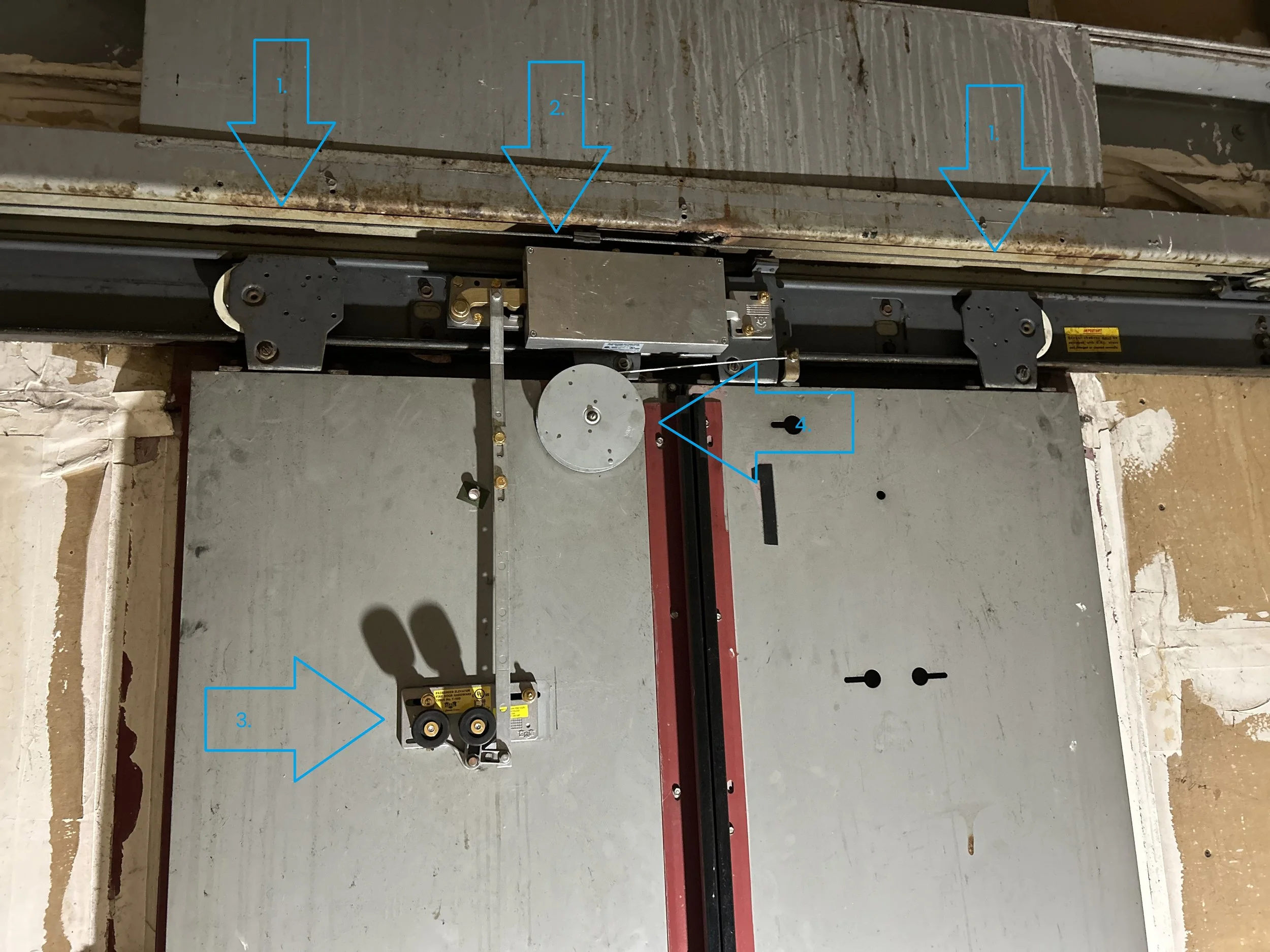
Hoistway door equipment
The previous picture showed the elevator car side equipment. The door operator provides power to the car door. Each hall landing has a set of doors, as well. These doors do not have power to them.
Hanger rollers. The hall door panels hang on the track by hanger rollers. These allow the doors to roll smoothly (on not). Code does not require these to be changed during a modernization, but they come standard with a Washington Elevator project. [Serviceability improvement]
Interlock. The interlock performs multiple functions. It physically locks the door closed when the elevator is not there to avoid a fall hazard. And it electrically signals that the door is closed so the elevator can safely move. These are replaced on all Washington Elevator modernizations. [Serviceability improvement]
Pickup Roller Assembly. Remember, the hall doors do not have power. They open and close when the elevator is at that landing and the clutch engages with the pickup rollers. The pickup rollers lift the interlock when engaged. [Serviceability improvement]
Spirator. A spirator is a spring loaded device that pulls the doors closed after the clutch releases the pickup rollers just before the doors closed. Again, replaced on all Washington Elevator modernizations. [Serviceability improvement]
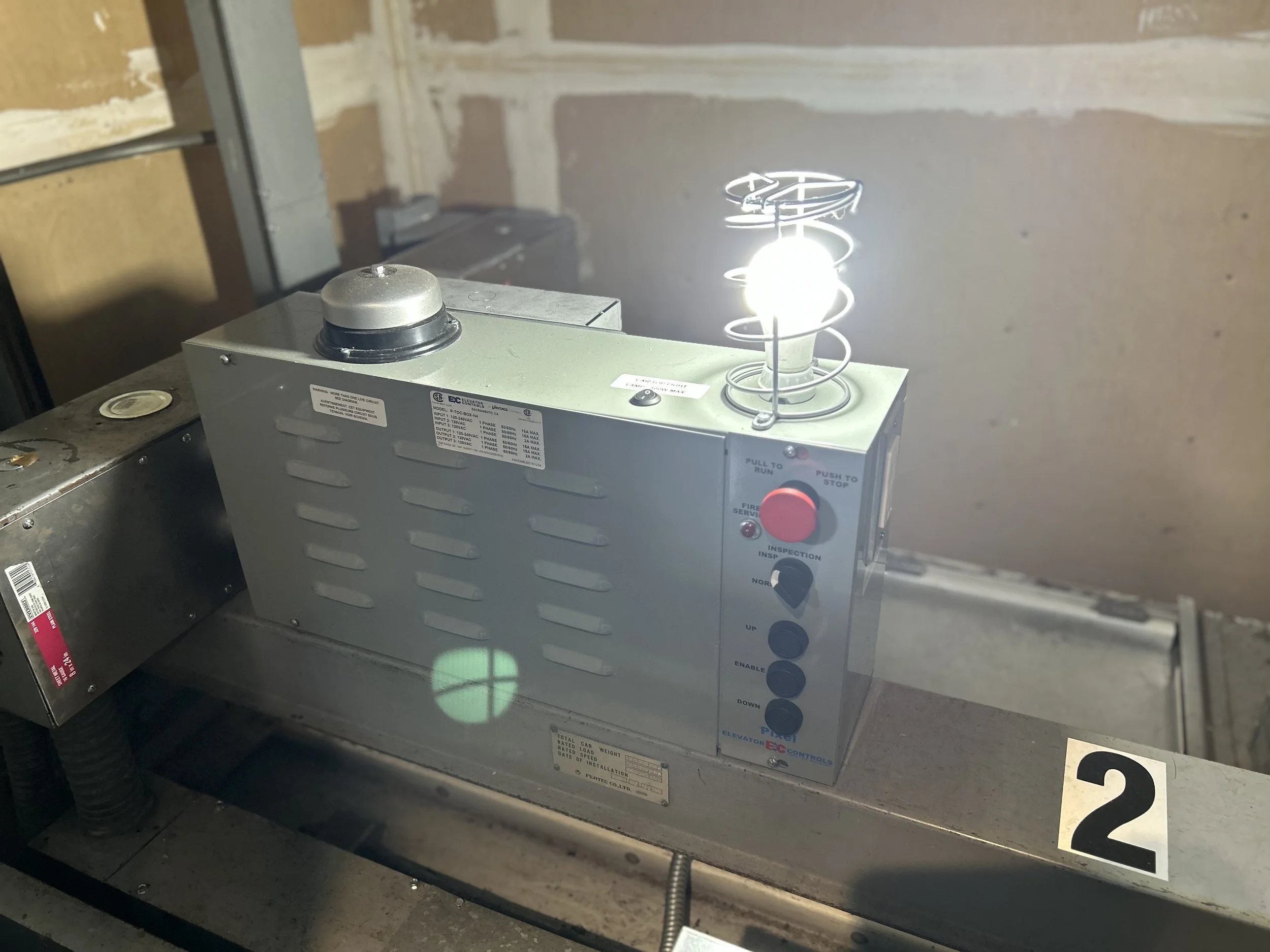
EC Pixel car top inspection station
The car top inspection station houses the second of three points of access to the EC Pixel controller. The third is located behind the car operating panel (not pictured). It also includes the car top light, emergency alarm bell and inspection functions.
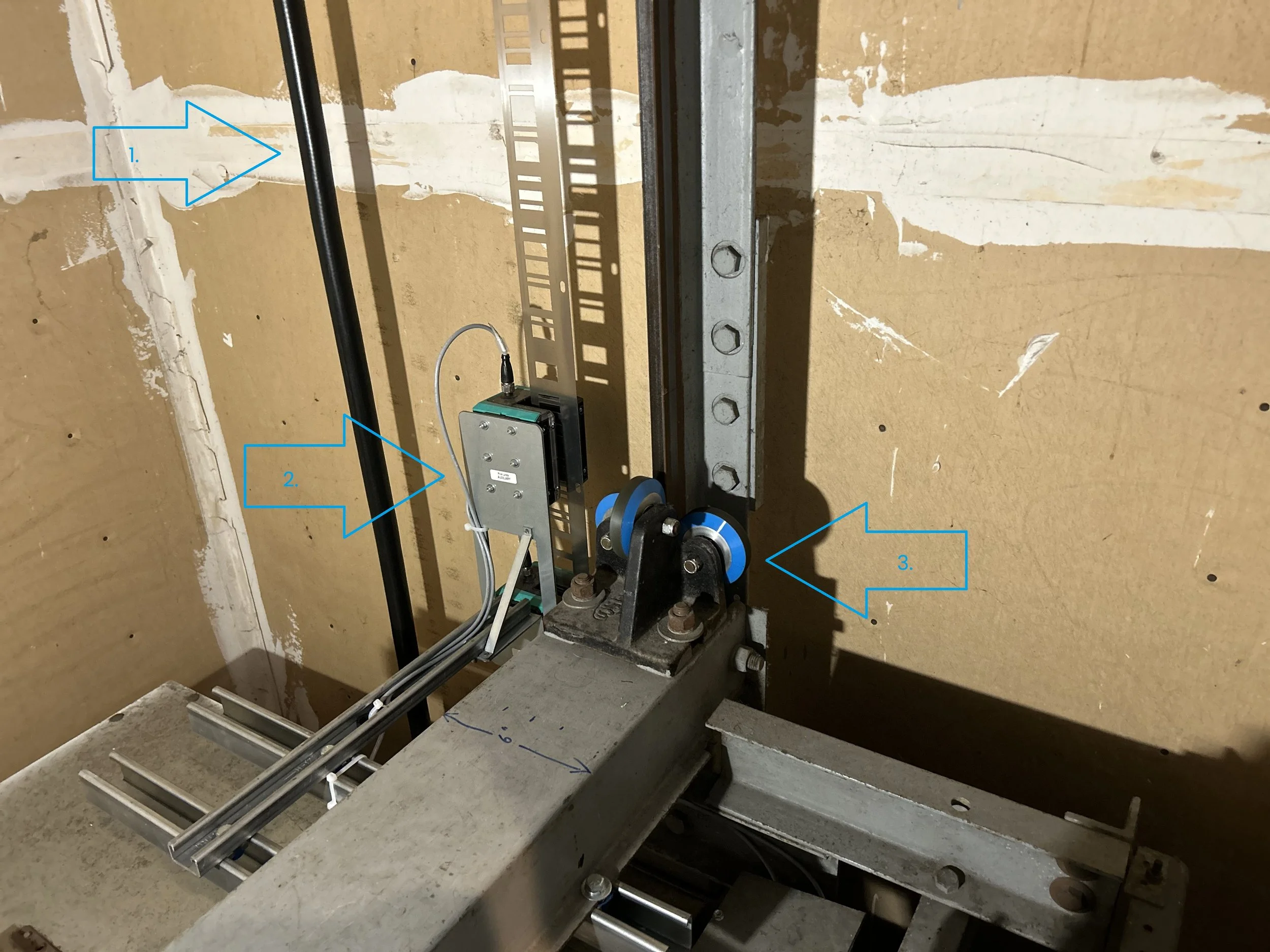
Car top
Traveling Cable. The traveling cable is a bundle of wires that allows communication between the elevator controller and cab.
Landa Absolute Positioning System. Also known as the selector, this positioning system provides exact car positioning at all times within the hoistway with no magnet or floor switch placement (less failure points).
Roller Guides. Roller guides keep the elevator cab in the correct position horizontally. They also contribute to ride quality. Bad bearings or flat spots can provide a negative experience. Roller guides are replaced on all standard modernizations. [Serviceability improvement]
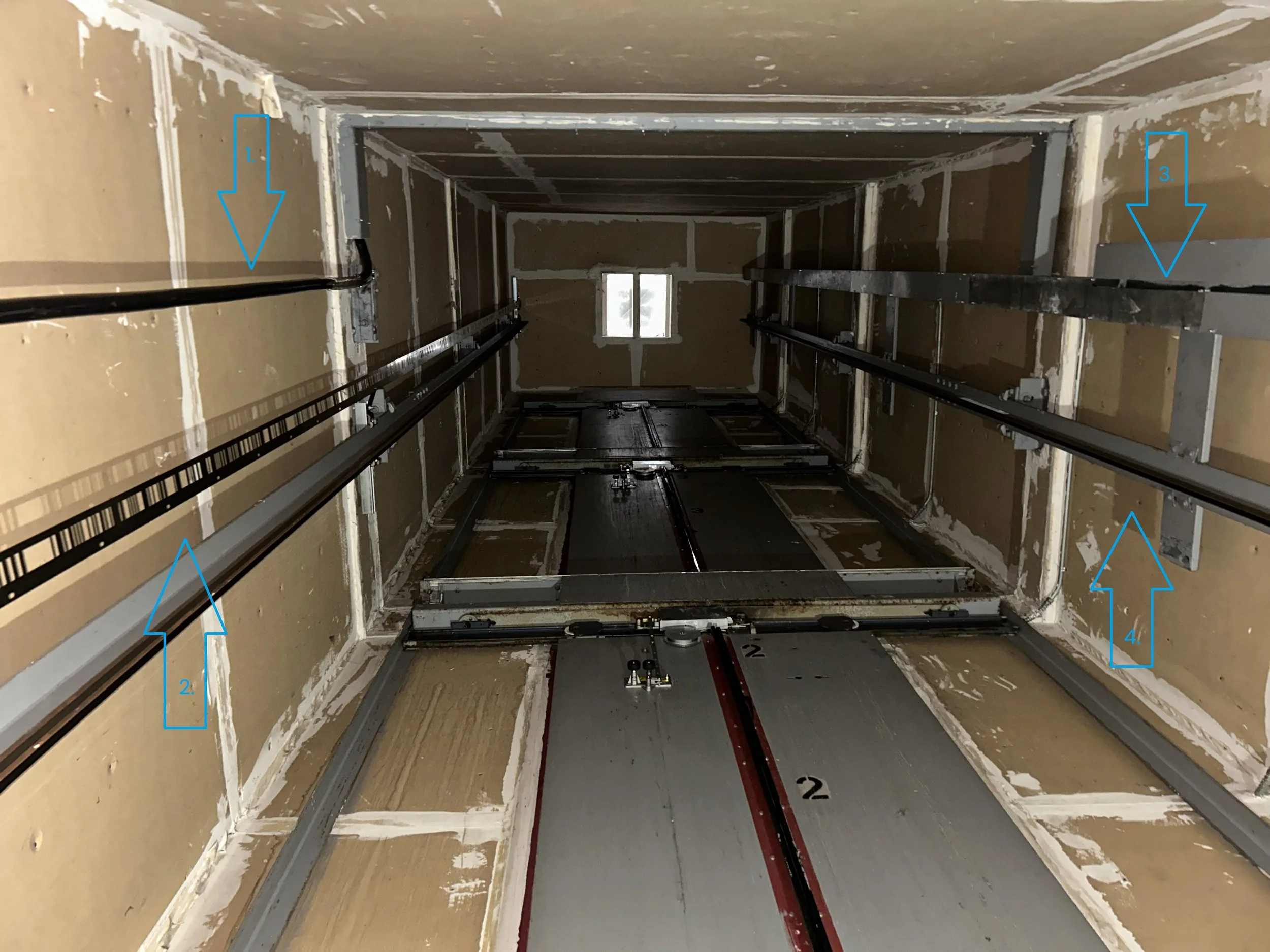
Hoistway
Traveling Cable. See above.
Selector Tape. Part of the positioning system. This is the tape that is by the selector to indicate the elevators position in the hoistway.
Wire Raceway. Also known as “gutter”, this is the pathway for hoisway wiring and door lock wire. When possible, this is typically retained in a modernization.
Guide Rails. Guide rails provide stability and prevent swaying or vibration in the hoistway. These are almost always retained in a modernization. They are checked for proper connection and any rough spots are addressed.
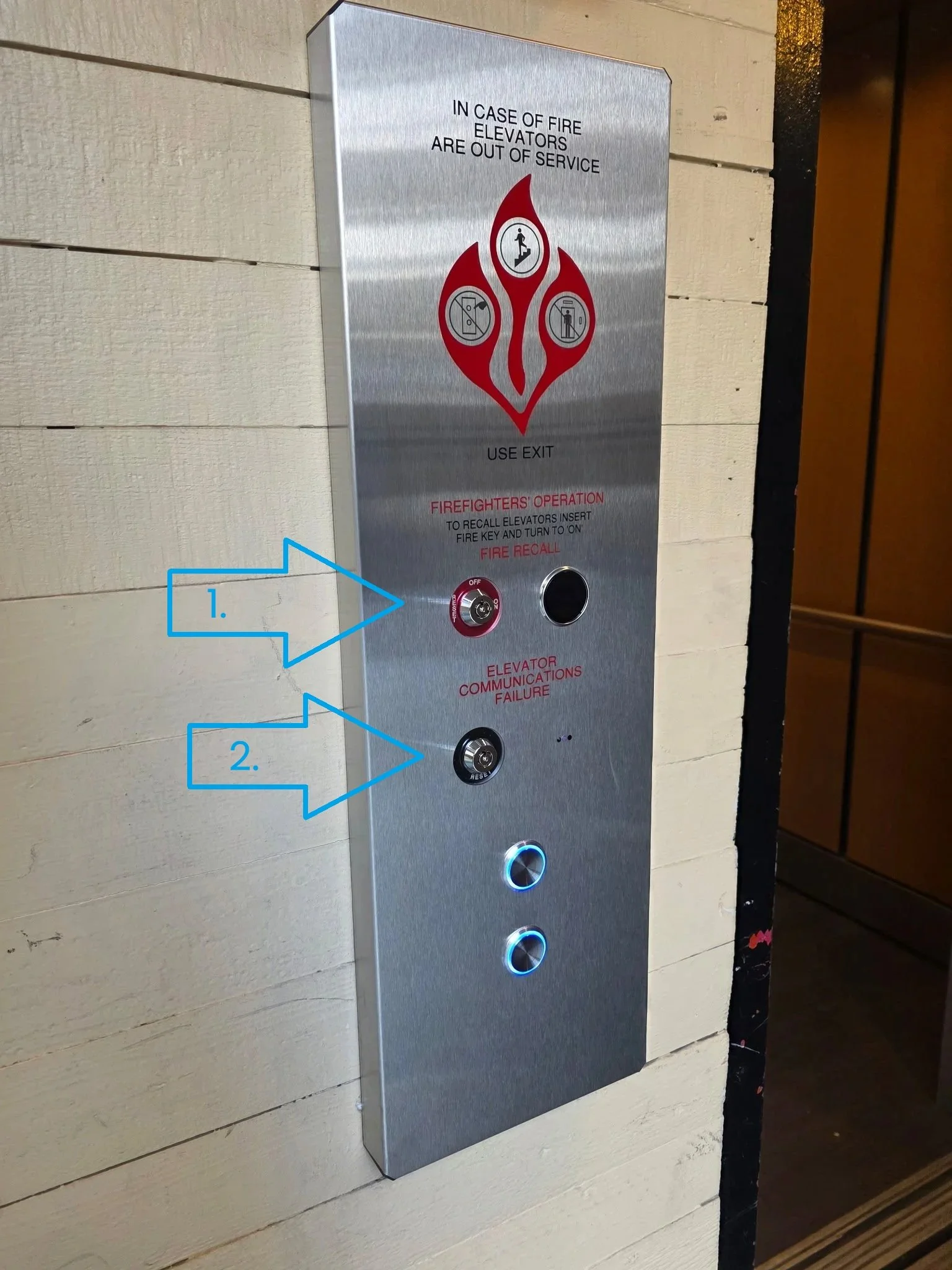
Egress landing hall station
The main egress landing is where many of the safety functions are located including the following.
Phase I Fire Service. We talked about fire service testing testing here. Phase I fire service will recall the elevator to the main egress floor in the event of a fire. This key switch is used to manually put the elevator into fire service mode. When turned to “ON”, the elevator will recall to this floor and remain there with the doors open until it is turned off of fire service operation or Phase II operation is engaged. When on Fire Service, the indicator on the right will illuminate a fireman’s hat. [Code required]
Elevator Communications Failure. New code requires a communication failure device. This is monitoring the emergency phone line. If it loses voltage, this communications failure device will sound an alarm. The key switch is there to reset the alarm. [Code required]
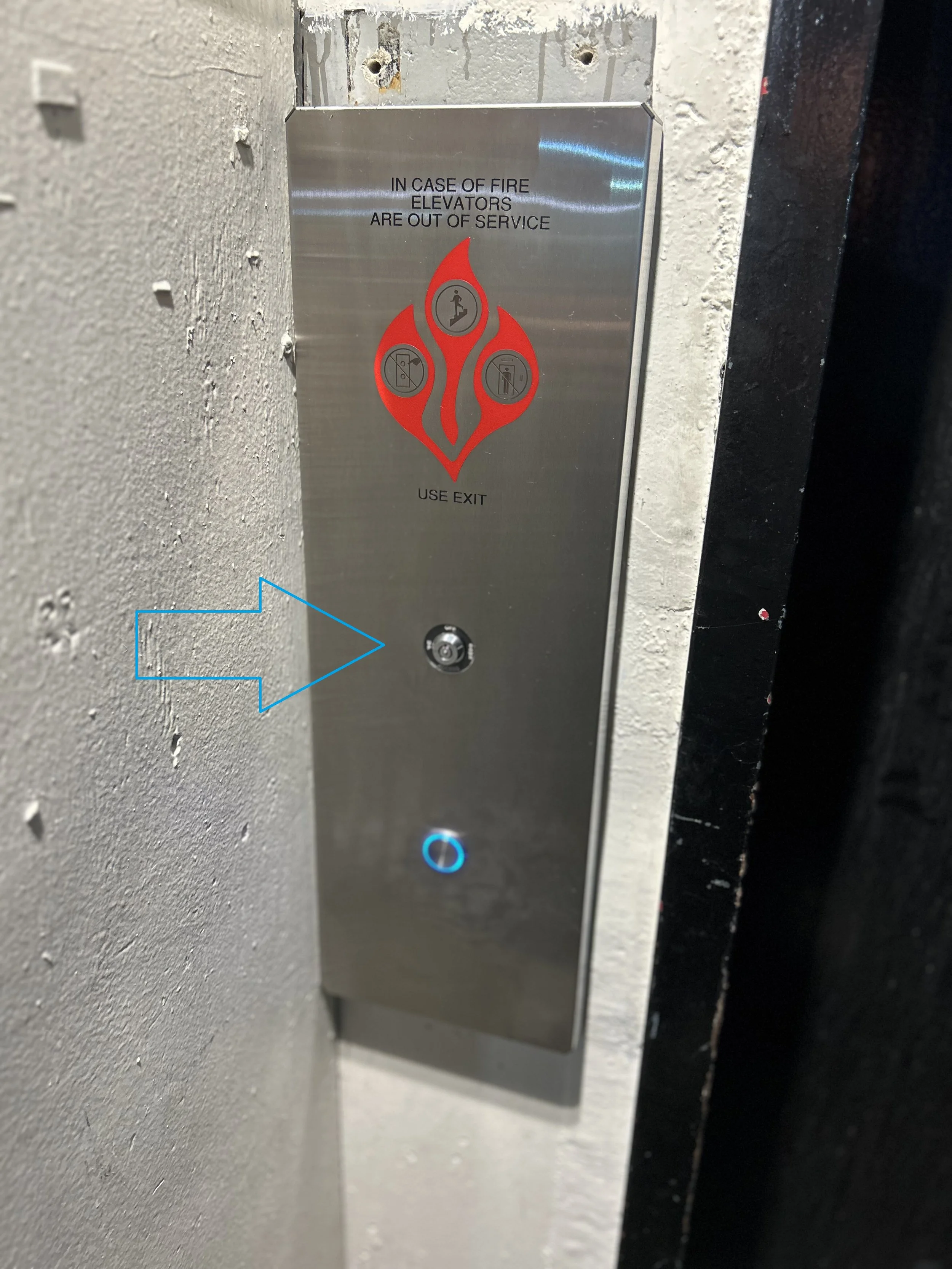
Terminal landing hall station
Non-egress floors have fewer requirements. For intermediate floors (not the top and bottom), it’s an up button, down button and “tri-flame” signage “In Case of Fire, Elevator is out of Service. Use Stairs.” Terminal floors (top and bottom floors) will only have the up or down button and a hoistway access key switch.
Hoistway Access. This key switch is for authorized personnel to safely access the elevator space. [Code required]
That’s a wrap for this project. What other modernization questions do you have? Contact Sean for more information.
Special thanks to our vendor partners: